TEST PAGE · CONCEPT PREVIEW · NOT YET OPEN
MAKE KYOTO.
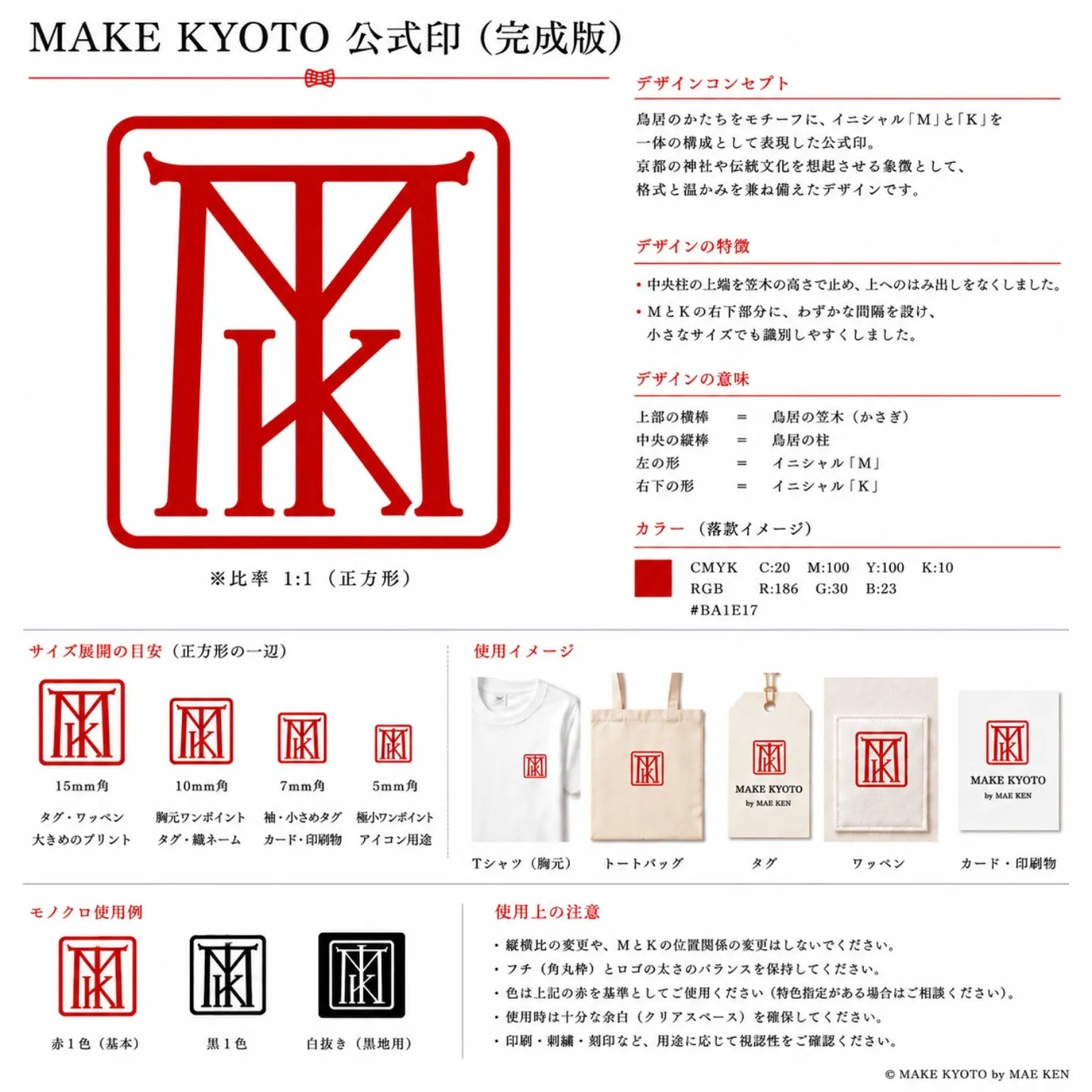
MAKE KYOTO · GINKAKU-JI APPROACH ENTRANCE · KYOTO

GENUINELYMADE IN JAPAN.A RARE FIND.

Japanese fabric. Japanese sewing. Japanese craftsmanship.
Original wordplay, inspired by over 30 years of newspaper editing.
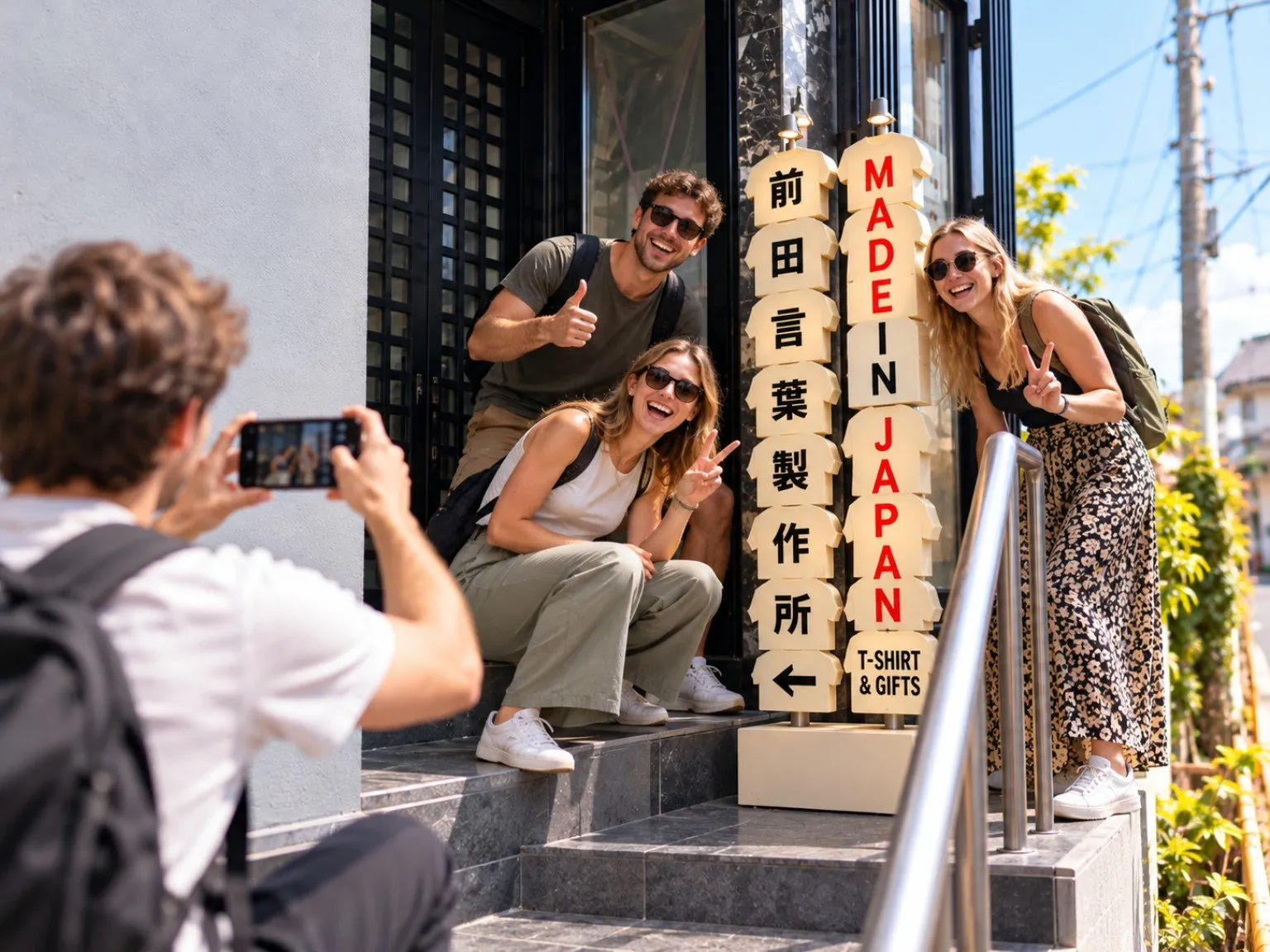
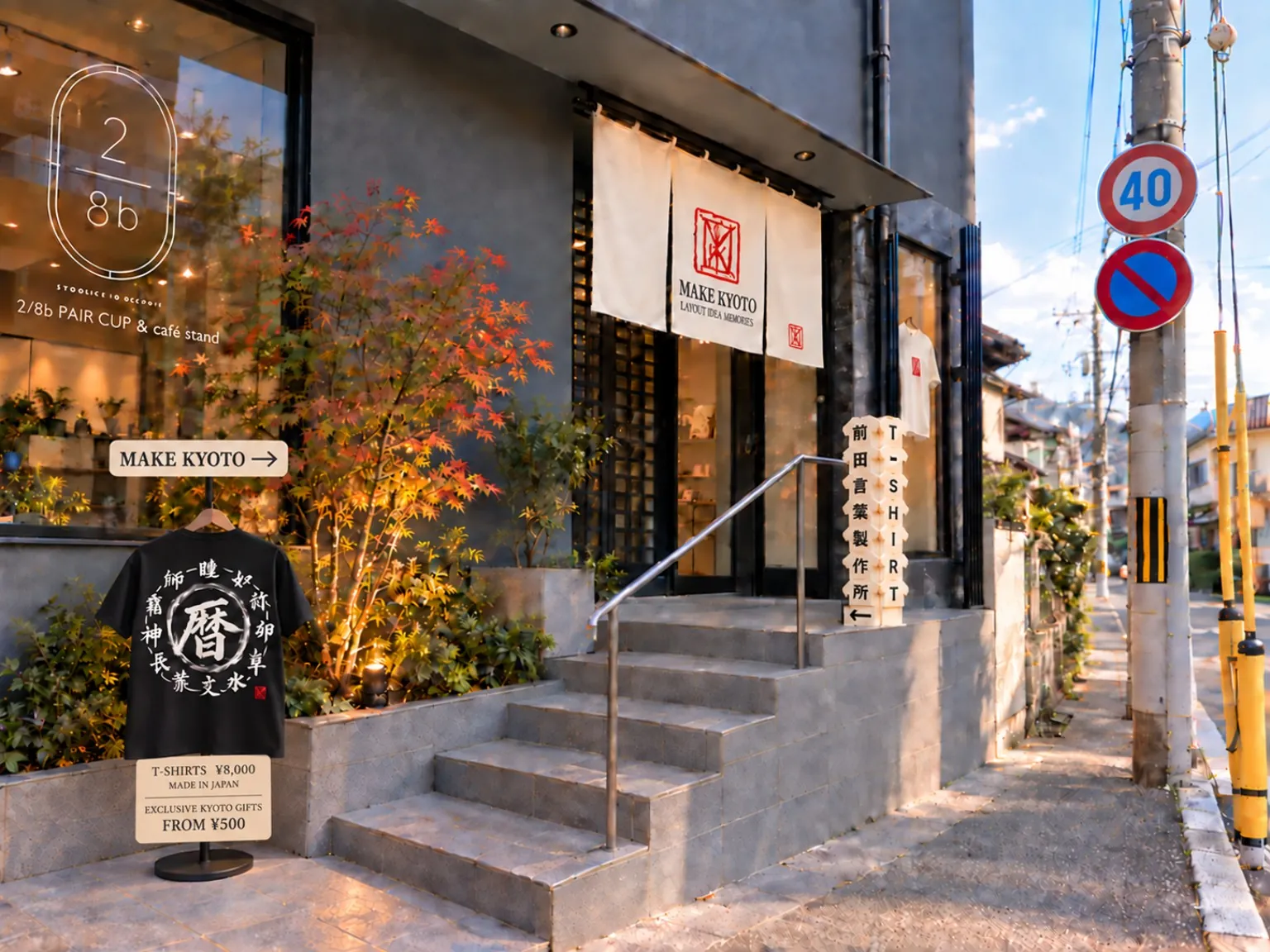
Coming to the entrance of the Ginkaku-ji (Silver Pavilion) approach in Kyoto.

Concept visualization · Shop appearance subject to change
CRAFTED WITH PURPOSE

Japanese Fabric. Japanese Craftsmanship. Japanese Words.

From fabric made in Japan to sewing carried out in Japan, our T-shirt blanks are crafted entirely in Japan. We pair that craftsmanship with original designs inspired by Japanese words, kanji and Kyoto.

Our collection is in development. Designs, specifications, availability and the opening date may change.

01 / THE COLLECTION

Words you can wear.

Exclusive MAKE KYOTO designs: a collection of ten T-shirt concepts inspired by Kyoto, its landscapes, and the beauty of Japanese words. Explore both sides of each design.

Preview only. All products, designs, specifications, prices, and availability shown here are provisional and may change before opening.

Made in Japan T-shirts — ¥8,000 (tax included)

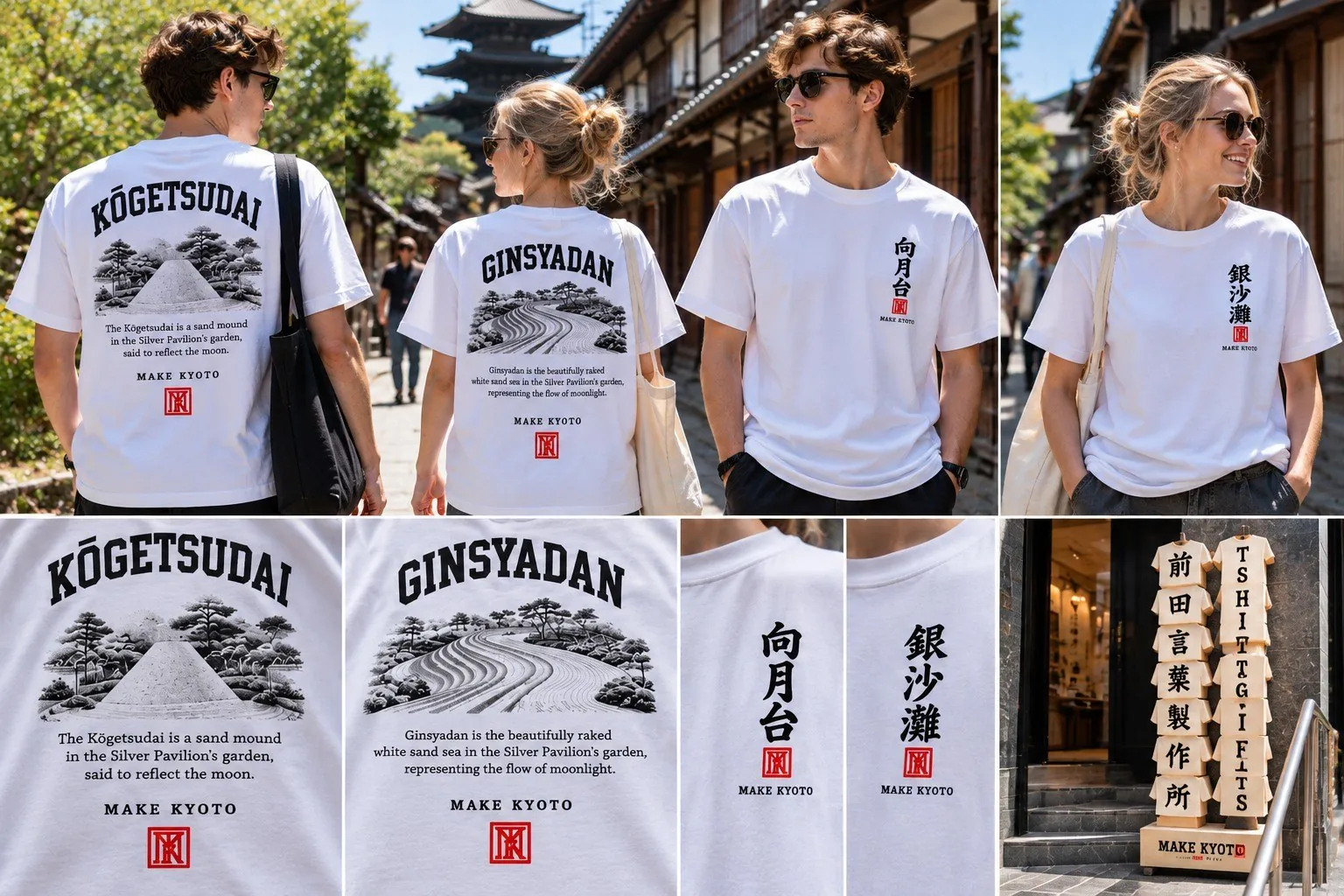
Concept image of visitors wearing MAKE KYOTO T-shirts

Styling concept image. Final product specifications may vary.

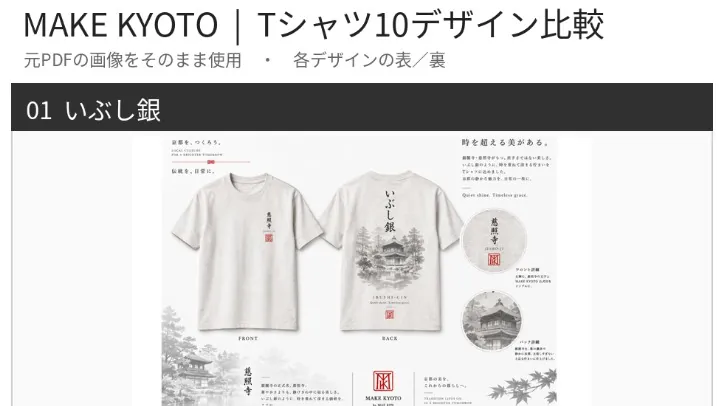
T-shirt design 01: Ibushi Gin

01 / Ibushi Gin

Design concept · Front and back
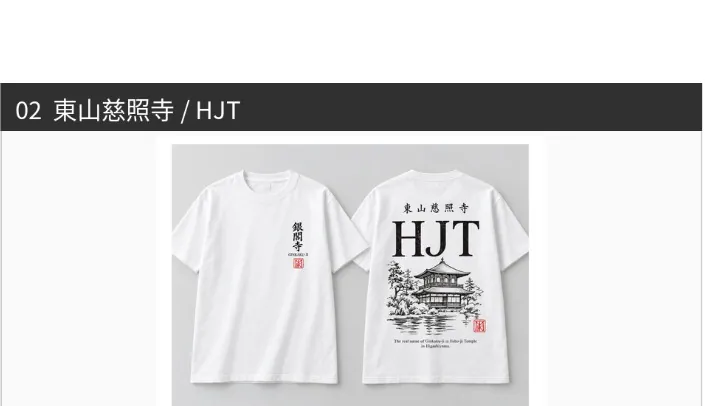
T-shirt design 02: HJT / Higashiyama Jishō-ji

02 / HJT / Higashiyama Jishō-ji

Design concept · Front and back
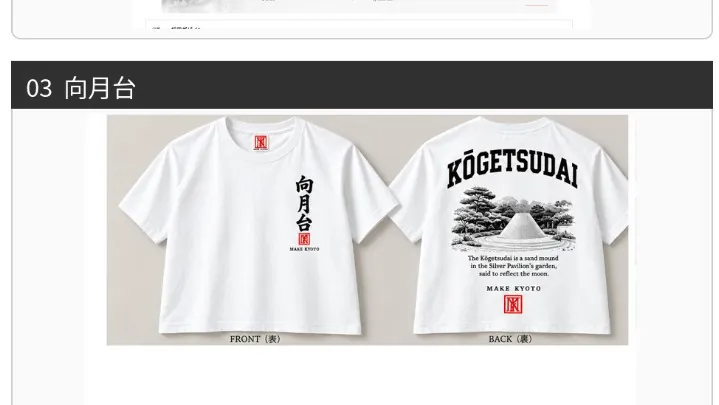
T-shirt design 03: Kōgetsudai

03 / Kōgetsudai

Design concept · Front and back
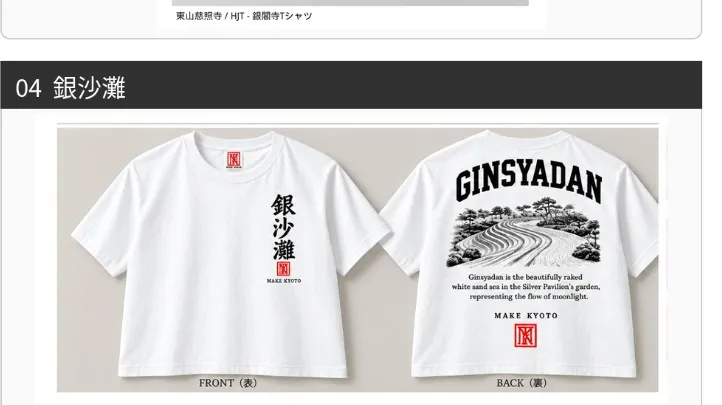
T-shirt design 04: Ginsyadan

04 / Ginsyadan

Design concept · Front and back
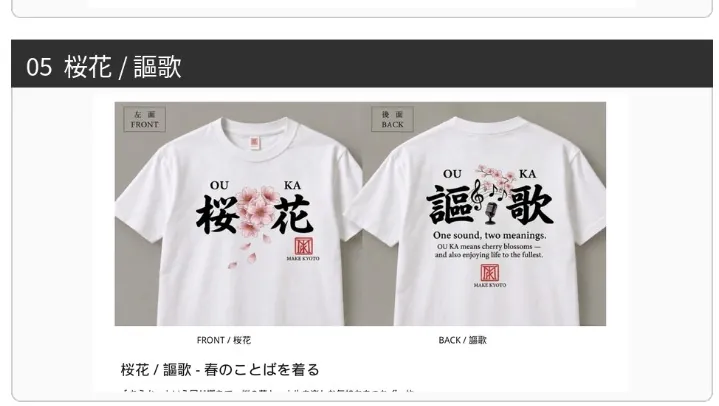
T-shirt design 05: Ōka

05 / Ōka

Design concept · Front and back
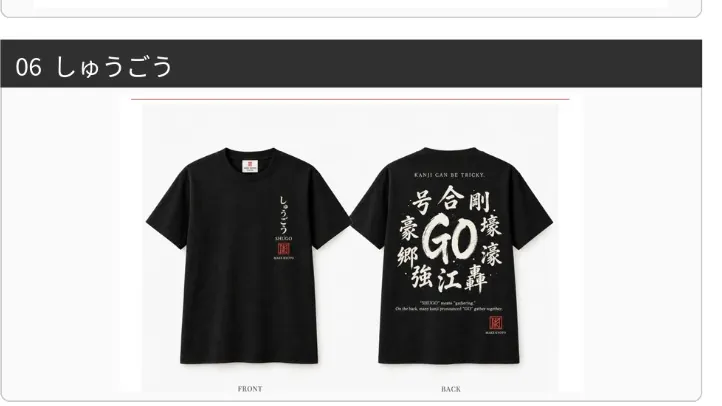
T-shirt design 06: Shūgō

06 / Shūgō

Design concept · Front and back
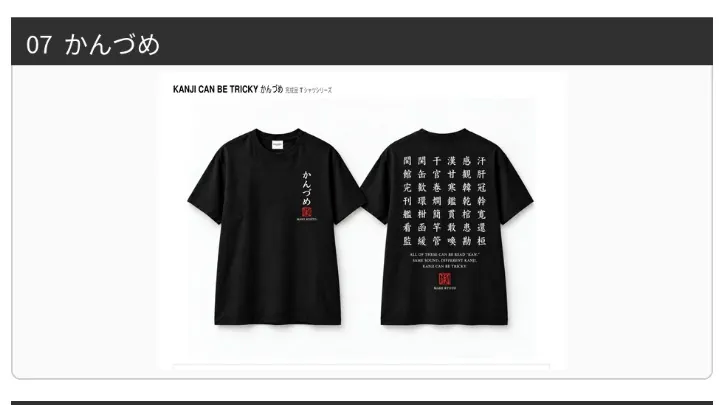
T-shirt design 07: Kanzume

07 / Kanzume

Design concept · Front and back
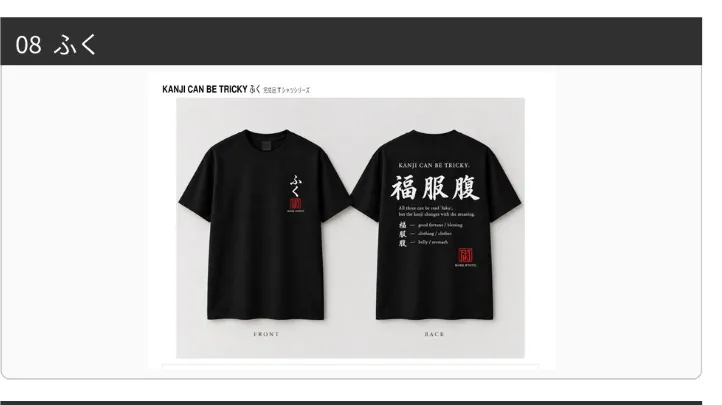
T-shirt design 08: Fuku

08 / Fuku

Design concept · Front and back
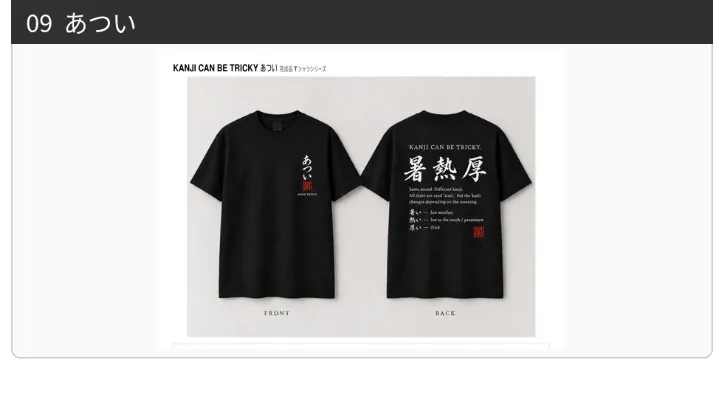
T-shirt design 09: Atsui

09 / Atsui

Design concept · Front and back
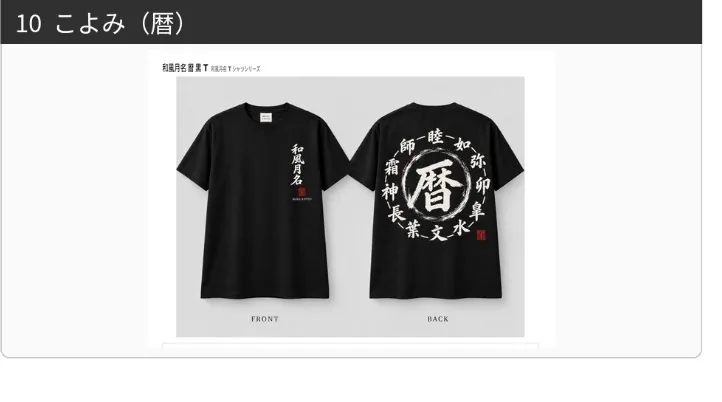
T-shirt design 10: Koyomi

10 / Koyomi

Design concept · Front and back
02 / GIFTS & EXPERIENCES

Make it yours.

Choose a word, leave your mark, and take a personal memory of Kyoto home.

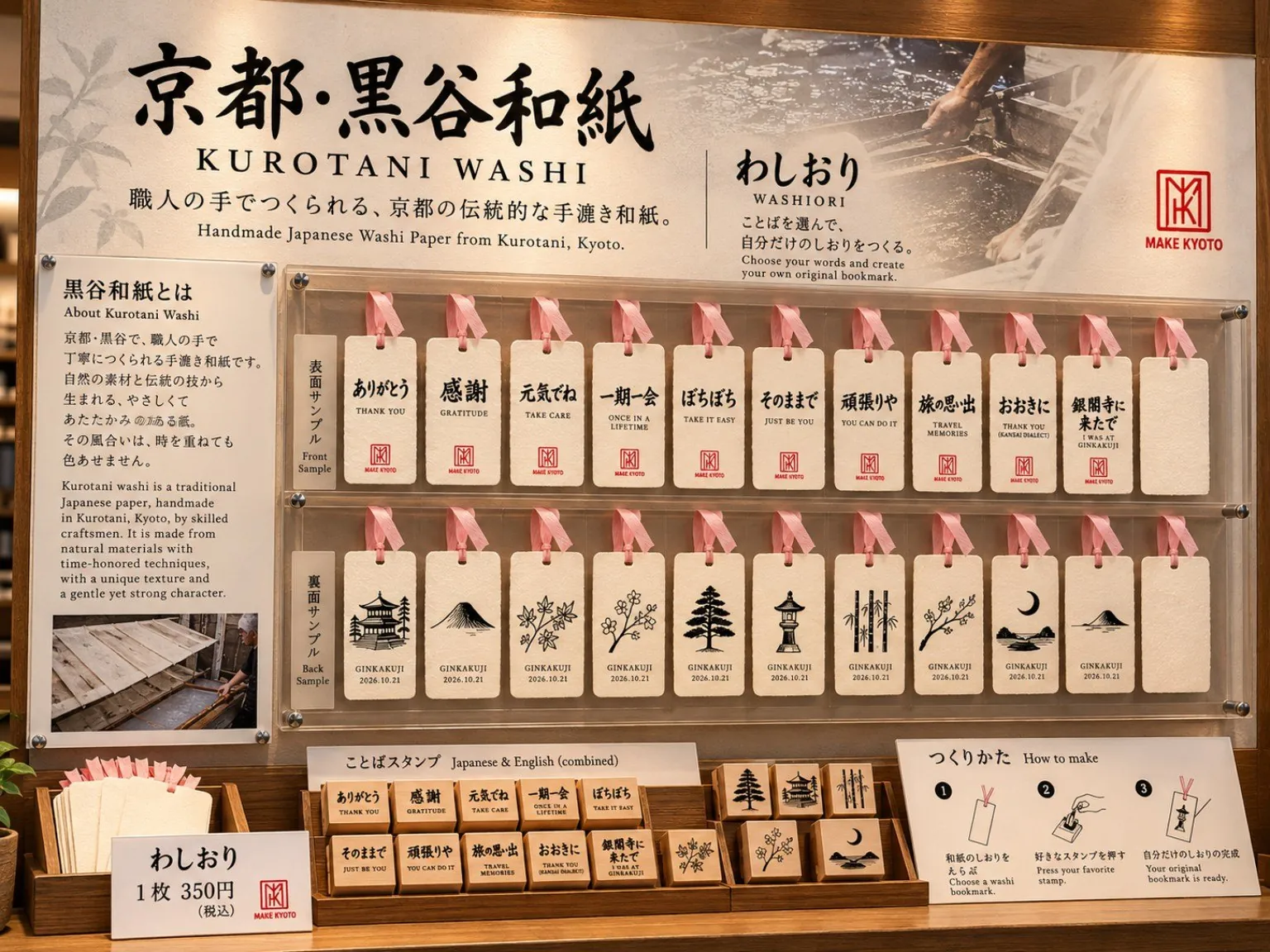
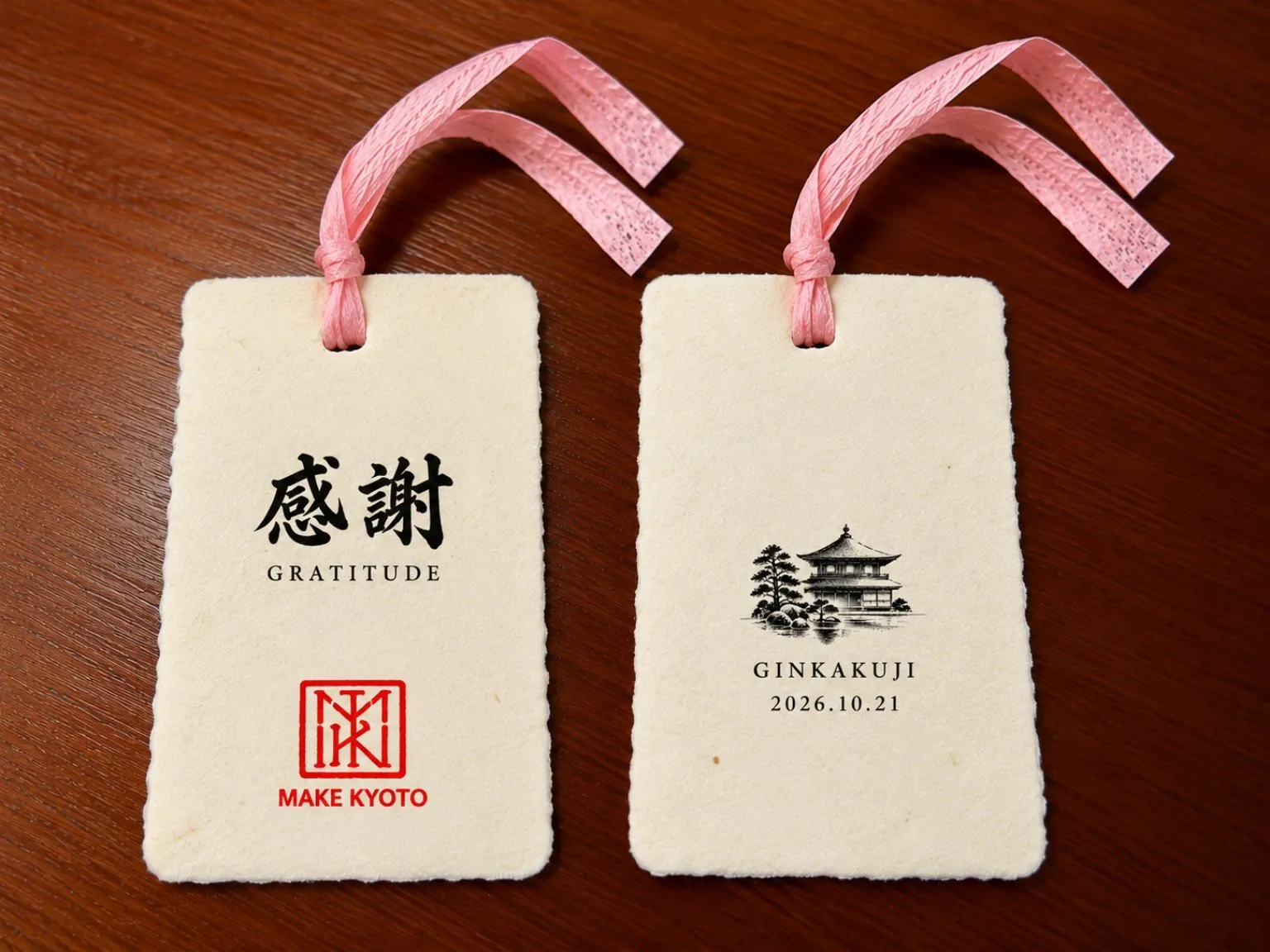
Washi bookmark front and back concept
WASHIORI

A bookmark with a message.

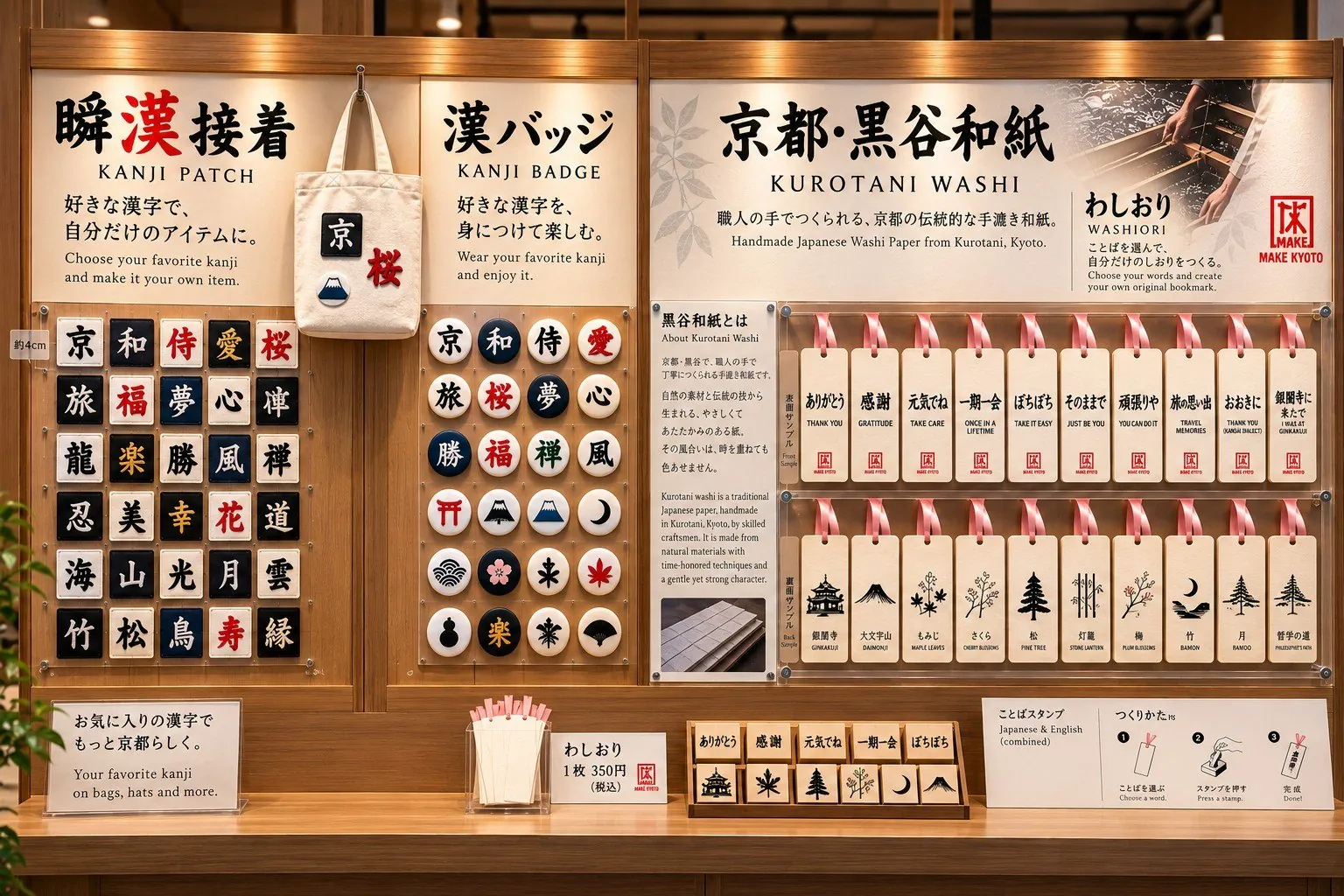
Inspired by traditional Kurotani washi paper. Choose words and motifs to create a keepsake that is uniquely yours.

Product and display concept.

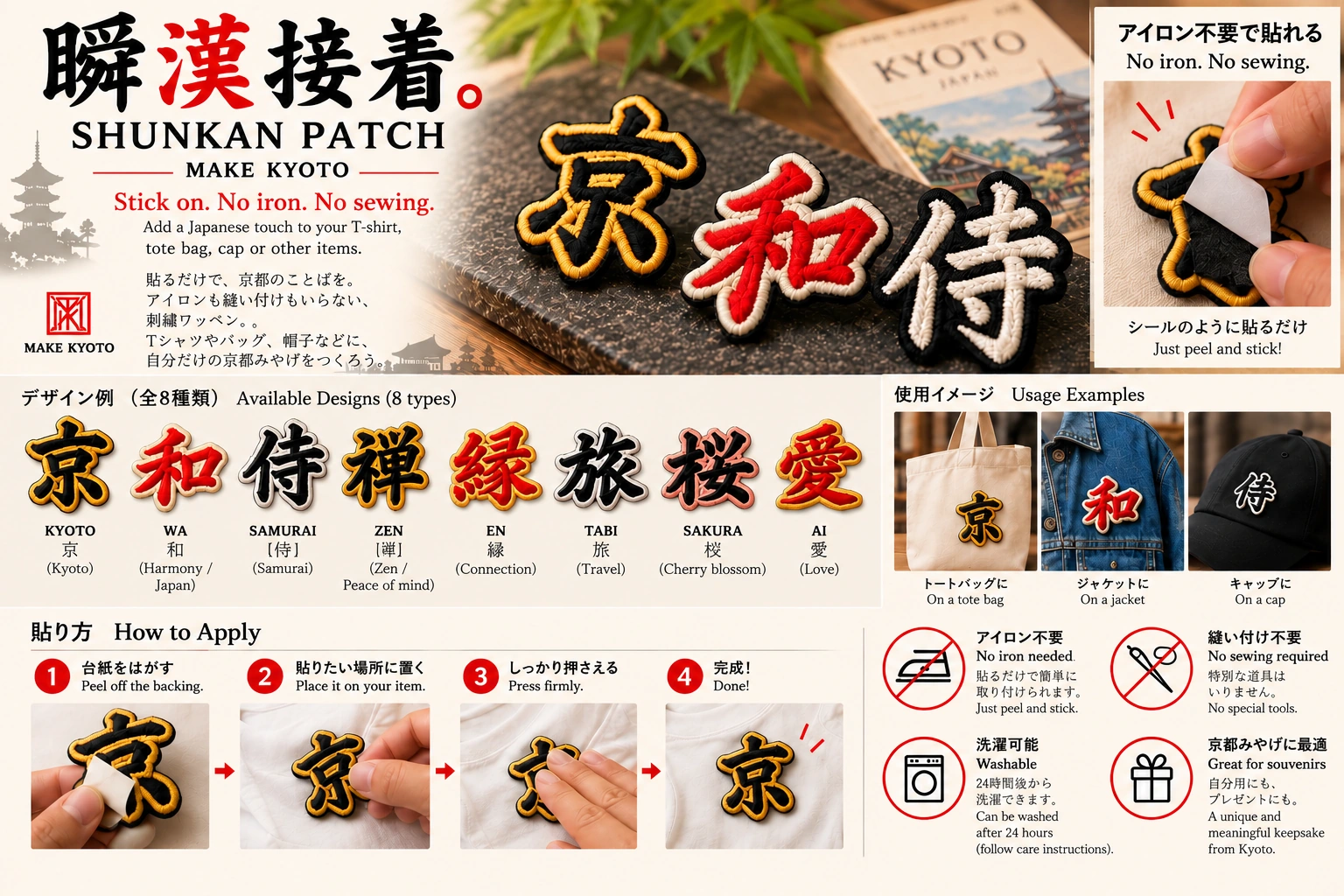
SHUNKAN PATCH

Your favorite kanji, your way.

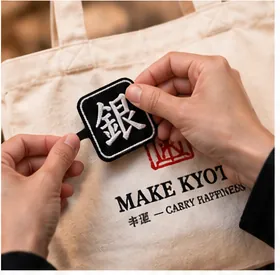
Choose a Japanese character to personalize a tote bag, T-shirt, or other suitable item. A small detail with a story of its own.

Single kanji patch ¥670 / GINKAKUJI set ¥1,800

Adhesive compatibility and care instructions to be confirmed.

SHUNKAN PATCH design and application concept
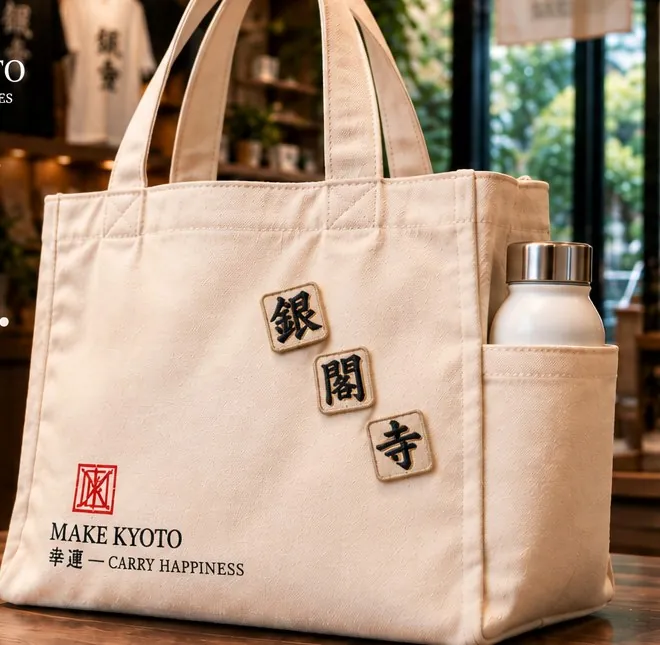
MAKE KYOTO canvas tote with three small embroidered kanji patches, Gin Kaku Ji
CANVAS TOTE

Carry happiness.

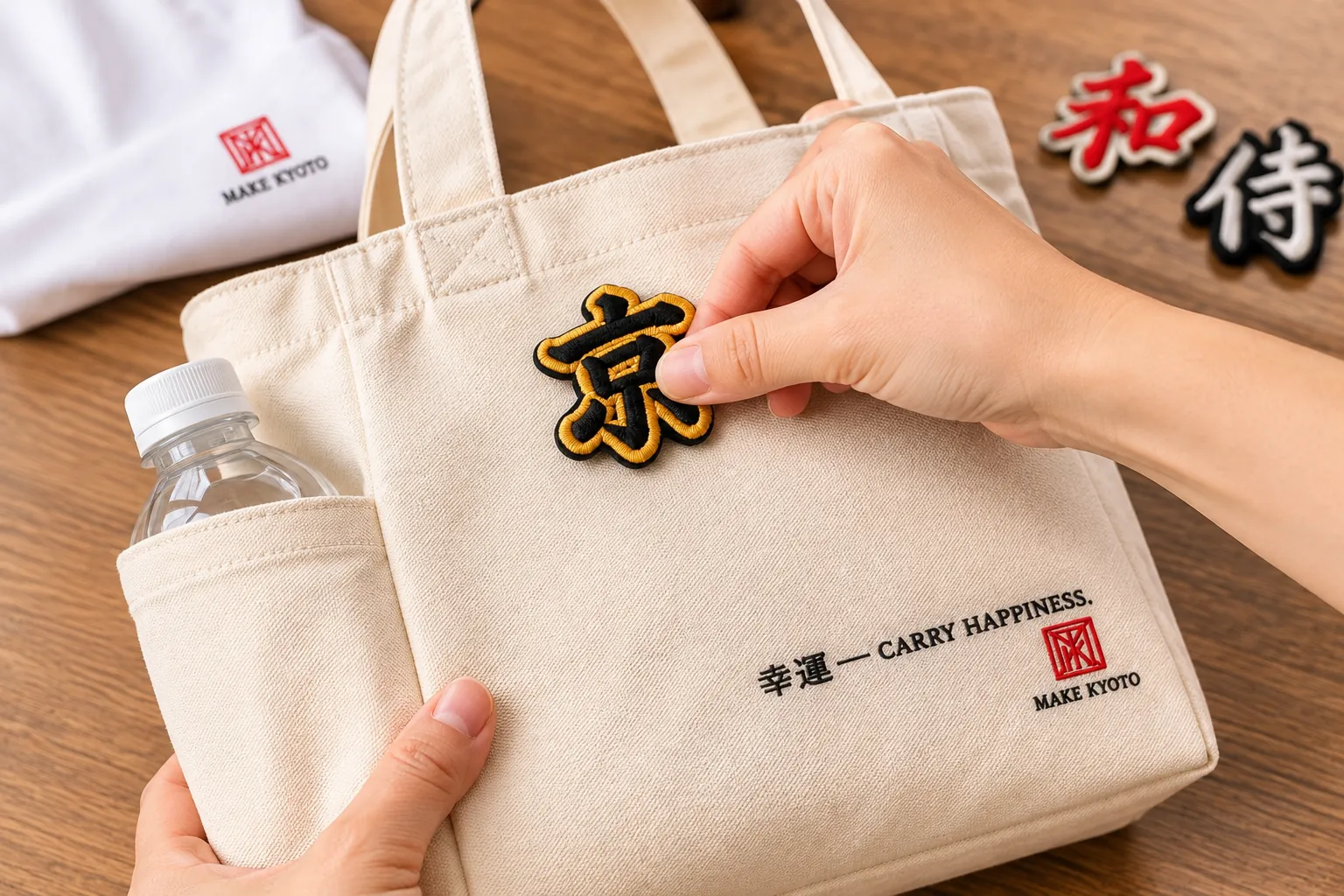
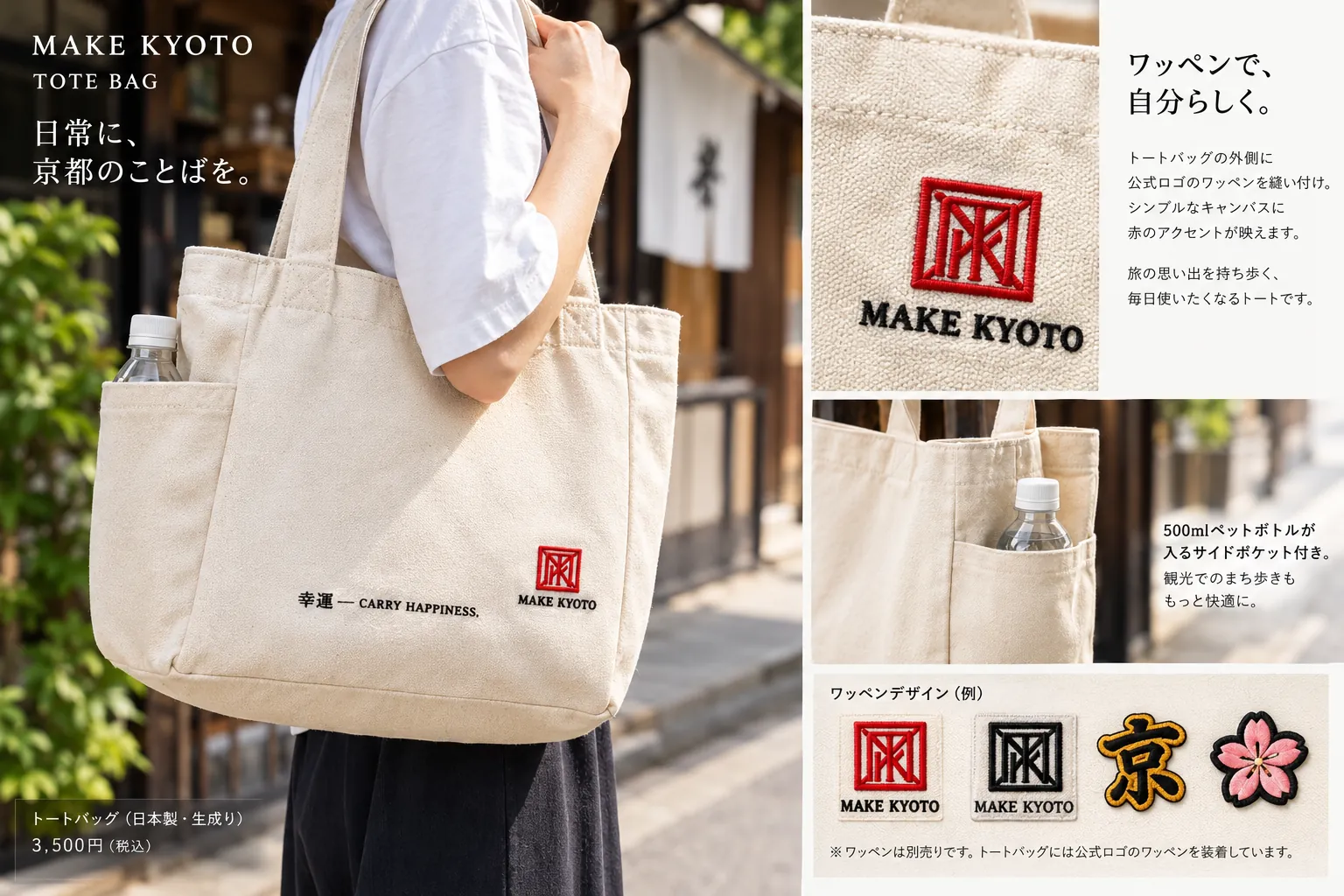
A Made-in-Japan canvas tote with a simple message: 幸運 — CARRY HAPPINESS. Personalize it with the GINKAKUJI three-patch set.

Canvas tote ¥4,000 / GINKAKUJI patch set ¥1,800 (3 patches)

Product concept. Final specifications to be confirmed.

Hands positioning a kanji embroidery patch on a MAKE KYOTO tote — concept image
Personalize your tote — concept image.
Proposed in-store displays for patches and washi bookmarks

Interior and merchandise display concept visualization.

02 / PERSONALIZE YOUR TOTE

Make it your own.

Choose your favorite Japanese character patch and make a Kyoto memory uniquely yours.

Choose a patch. Make it yours.
Carry happiness, wherever you go.

Concept images for website preview. Final product details may differ.

03 / OUR STORY

From headlines to kanji.

For more than 30 years, I have worked as a newspaper editor in Japan — choosing words, shaping headlines and arranging them on pages. Today, that experience inspires original T-shirt designs built around Japanese words, meanings and playful surprises.

From a tiny shop planned at the entrance to the approach to Ginkaku-ji (Ginkakuji), the Silver Pavilion in Kyoto, I hope to share the beauty of Japanese language and craftsmanship with travelers from around the world. Choose a design, add your personal touch, and take home a memory that feels like your own.
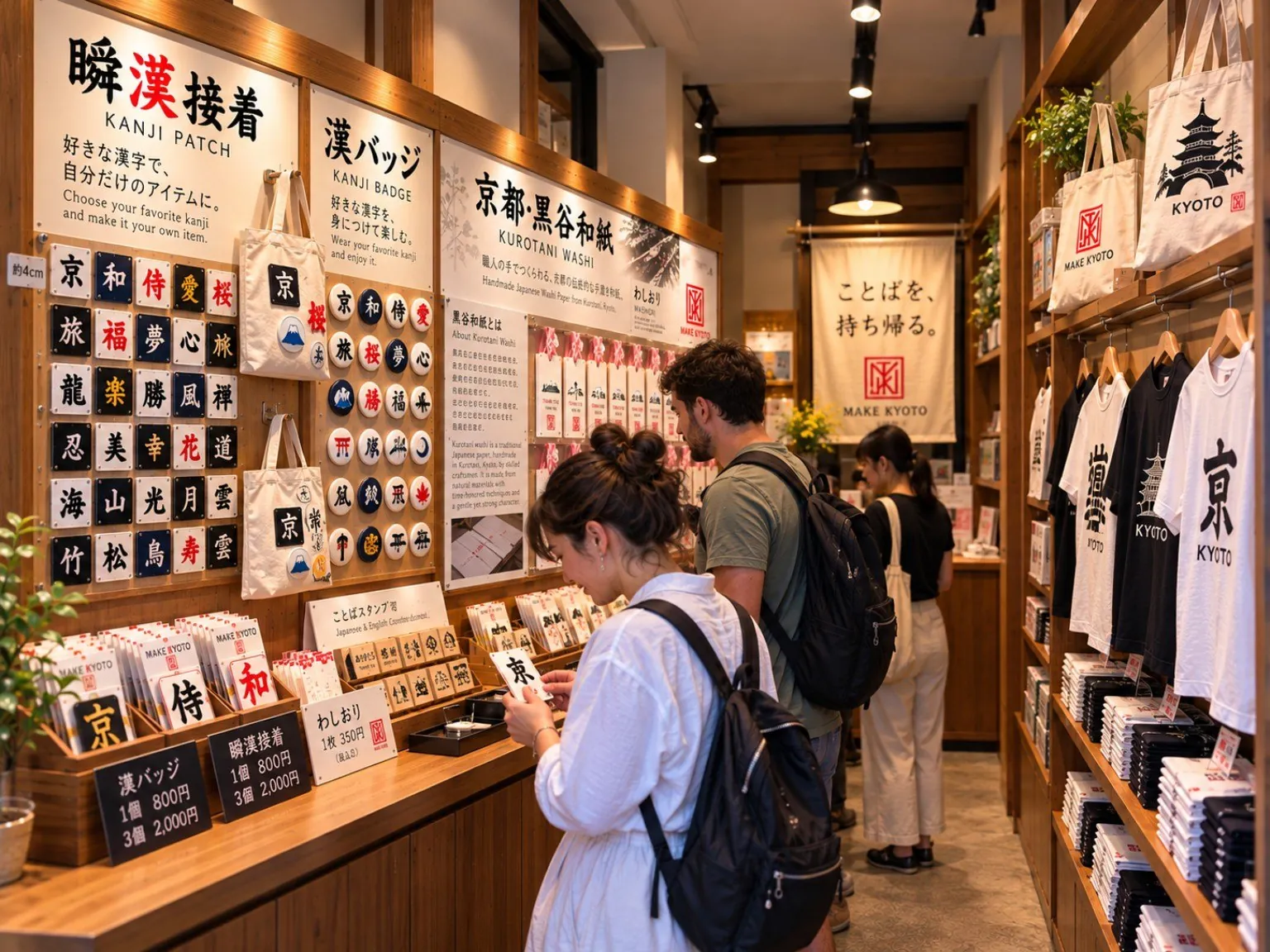
Interior concept visualizations; not photographs of an operating shop.
THE JOURNAL / FROM THE SHOPKEEPER

MAEKEN NOTE.

Little stories from Kyoto. The ideas behind our designs, the hands that make our products, and the everyday moments that inspire MAKE KYOTO.

VOL. 13 · NOVEMBER 16, 2026

The T-Shirt I Fell in Love With

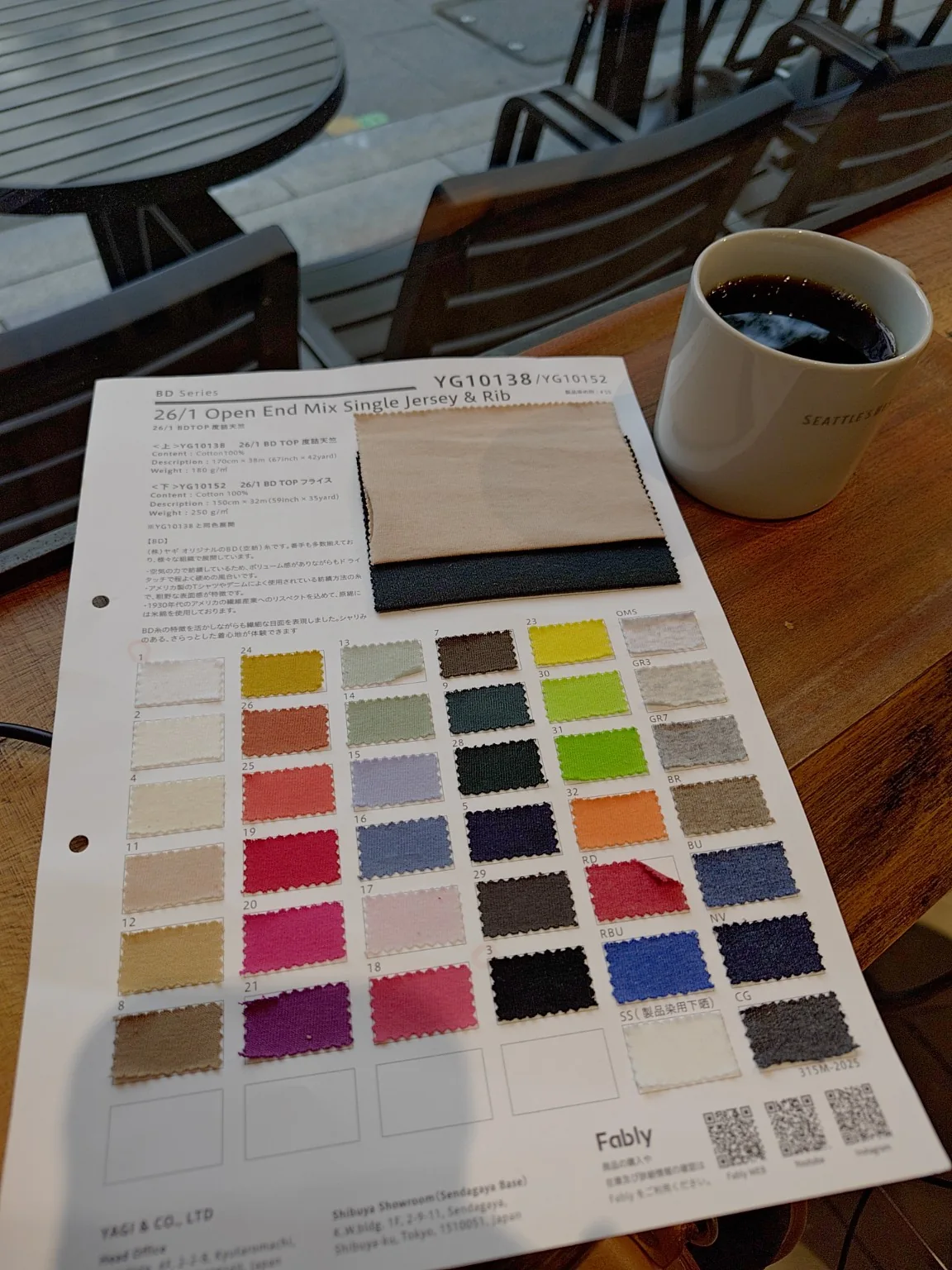
YAGI BD Series fabric swatch book with the selected white and black jersey fabric options
The fabric I chose: YAGI's BD Series, in white and black.
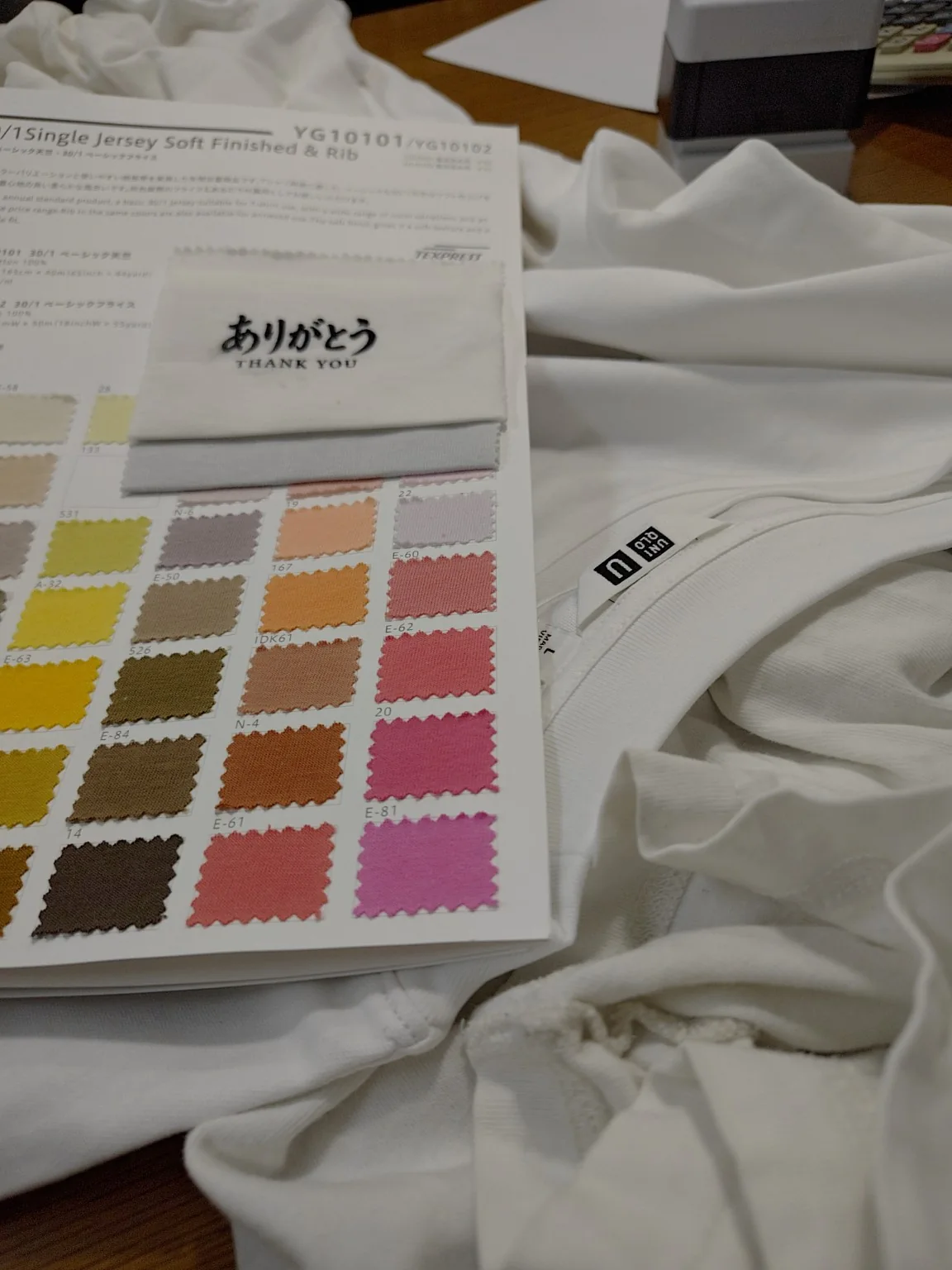
T-shirt and embroidered thank-you sample laid out beside another fabric swatch book during the Kauri meeting
A table full of samples and possibilities during today's meeting.

Today, I visited Kauri in Osaka to discuss the original T-shirts for MAKE KYOTO.

What a difficult decision. I went back and forth so many times.

In the end, I chose a silhouette and fabric developed by Mr. Saito at Kauri.

Relaxed, slightly dropped shoulders. Longer sleeves. A shorter body. And a sturdy neckline finished with an approximately 3 cm-wide rib.

The moment I saw the T-shirt hanging on a hanger, I fell in love with its shape.

Of course, a more conventional cut might appeal to more people. But then, wouldn't it look just like another souvenir T-shirt?

If I'm going to create something original, I want the shape itself to have character.

The fabric was another hard choice.

Originally, I had imagined something heavier and thicker, with a substantial weight to it.

Instead, I chose a fabric with a tough, dry feel and a distinctive texture, shaped by the skill of Japanese textile makers. There is more to a good fabric than thickness alone.

It also has another appeal: it's comfortable to wear throughout the year, not just in one season.

Even after getting home, though, the doubts haven't completely gone away.

Should I have gone for something heavier? Would a more ordinary shape have been easier for everyone to wear?

But I keep coming back to the same thought: I want MAKE KYOTO to be different.

I want to be able to tell a customer, in my own words, why I chose this shape and why I chose this fabric.

By the way, I hear the printing will be done at a factory in Kyoto.

The shape comes together in Osaka, the design adds its color in Kyoto, and the finished T-shirts will meet customers at the entrance to the Ginkaku-ji approach.

That's a pretty nice journey, isn't it?

I can't wait to see how they turn out.

There's just one thing I'm a little worried about...

The budget might be going a little over!

VOL. 12 · NOVEMBER 15, 2026

Ski Gear Can Wait. I Bought an Apron.

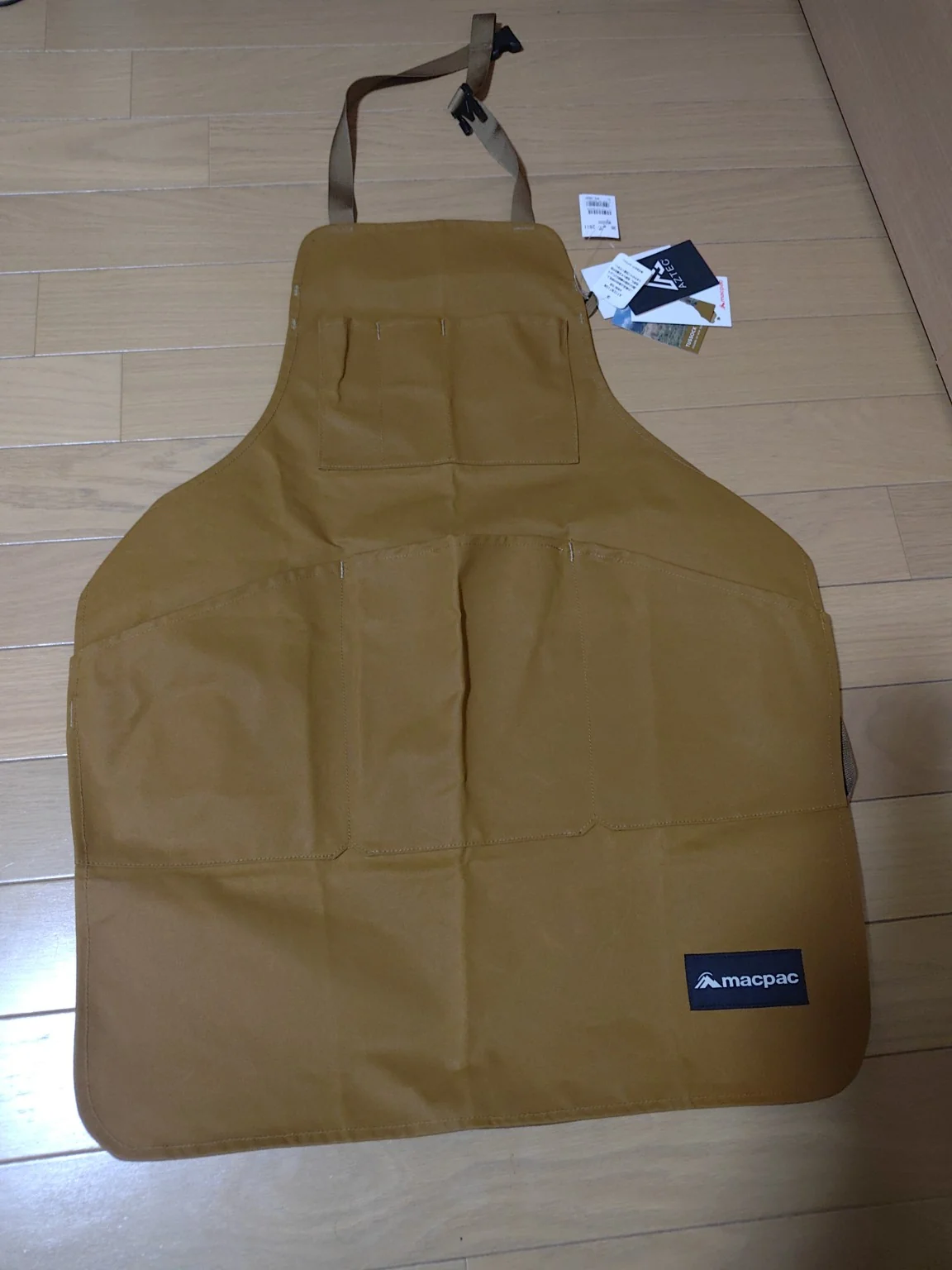
Camel-brown macpac apron with multiple pockets, ready for the future MAKE KYOTO shop
My one purchase at the sale: an apron for my future shop.
Yesterday, I went to the Goldwin family sale.

As someone who loves skiing, these sales are a dangerous place for me.

I found a pair of ski bib pants I liked, and a bag for my ski gear. Before I knew it, both were in my shopping basket.

But then I stopped.

Opening MAKE KYOTO is going to bring plenty of expenses. Perhaps this wasn't the time to buy more ski gear.

So, reluctantly, I put them both back.

Something else at the sale caught my eye, though: Japanese-made clothing by nanamica.

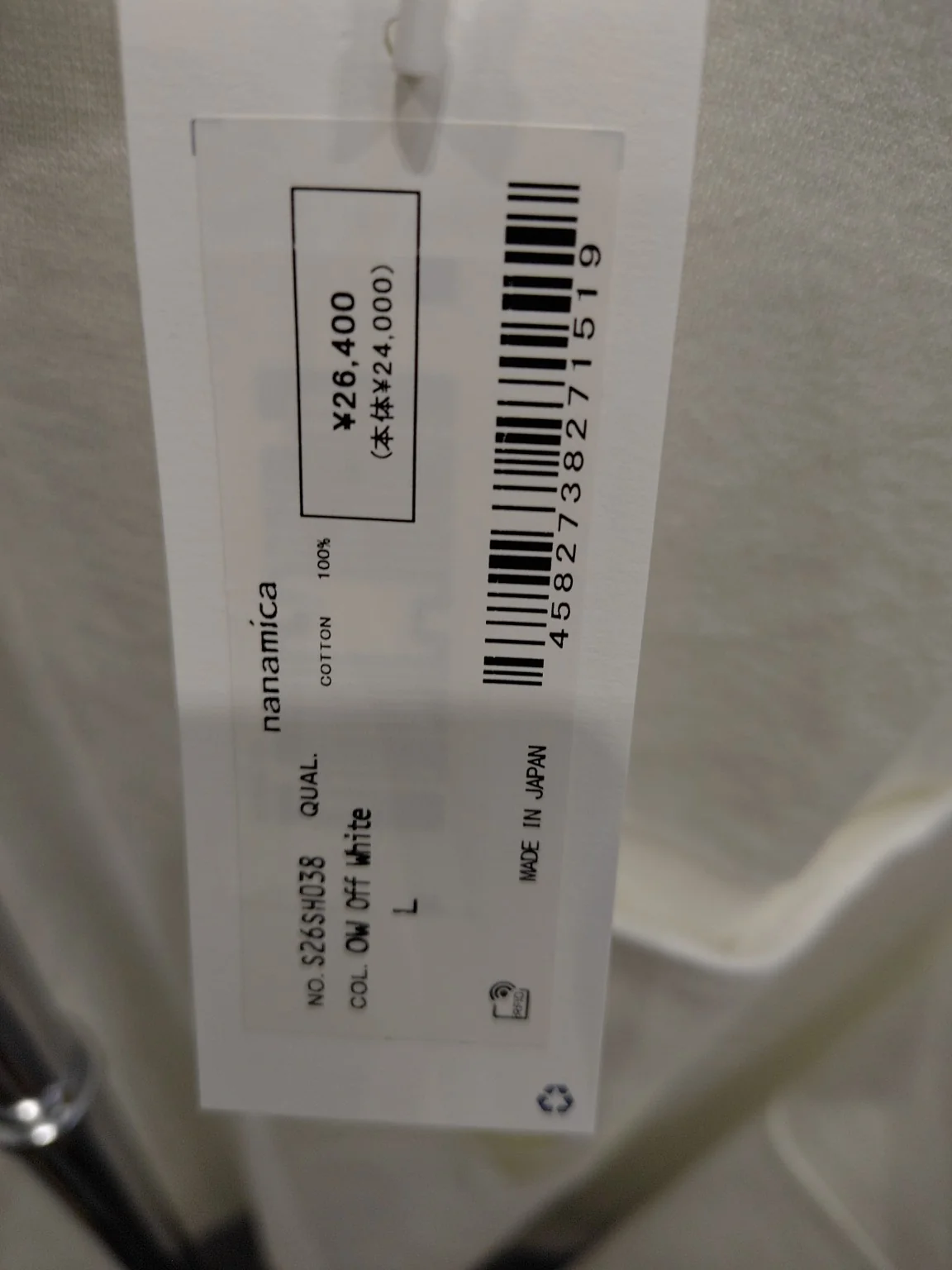
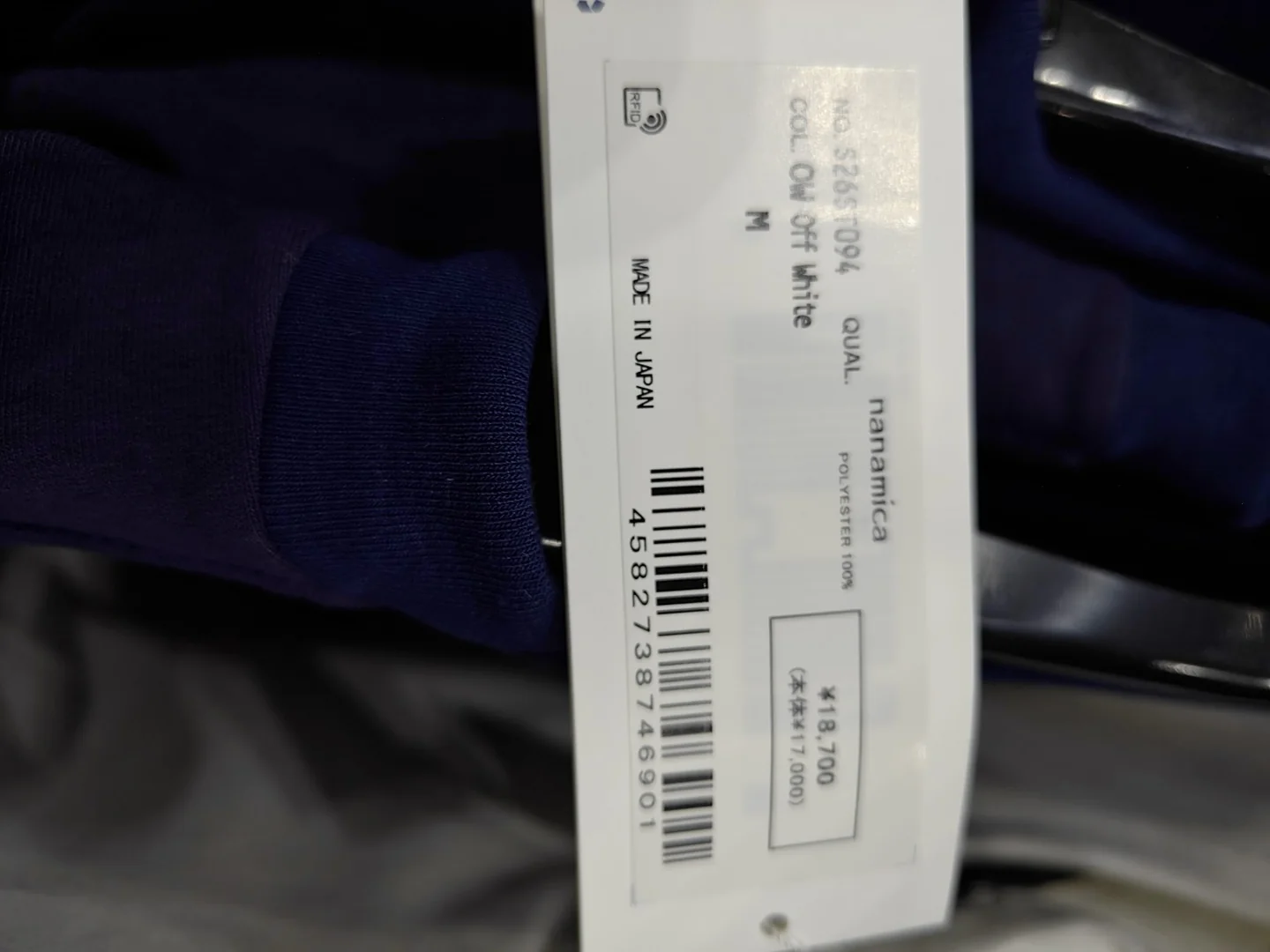
One made-in-Japan T-shirt had a regular price of ¥18,700. It was heavily discounted for the sale, but still cost around ¥8,000. I also saw another Japanese-made item with a regular price of ¥26,400.

nanamica made-in-Japan T-shirt tag showing a regular price of 18,700 yen
The regular price of this made-in-Japan T-shirt: ¥18,700.
nanamica made-in-Japan clothing tag showing a regular price of 26,400 yen
Another made-in-Japan item, regularly priced at ¥26,400.

At MAKE KYOTO, I'm planning to sell our own Japanese-made T-shirts for ¥8,000.

Of course, these are different products from different brands, so their prices aren't directly comparable. Still, seeing those tags made me think again about what Japanese craftsmanship is worth — and how important it is to explain that value.

I don't want to simply tell visitors, “It's made in Japan.” I want them to understand why that matters to us.

So what did I actually take home from the sale?

A macpac apron.

It's for me to wear at MAKE KYOTO, of course. I'm thinking of adding the words “前田言葉製作所” and “MAKE KYOTO” to make it my very own shopkeeper's apron.

The shop isn't open yet, but somehow, just buying an apron makes the dream feel a little more real.

Maybe, once the shop is running smoothly, I'll be able to take a proper ski trip again.

For now, one small step toward opening day.

— MAEKEN

VOL. 11 · NOVEMBER 14, 2026

“That’s a Lovely Bag.”

Today, I went to the Goldwin family sale at INTEX Osaka.

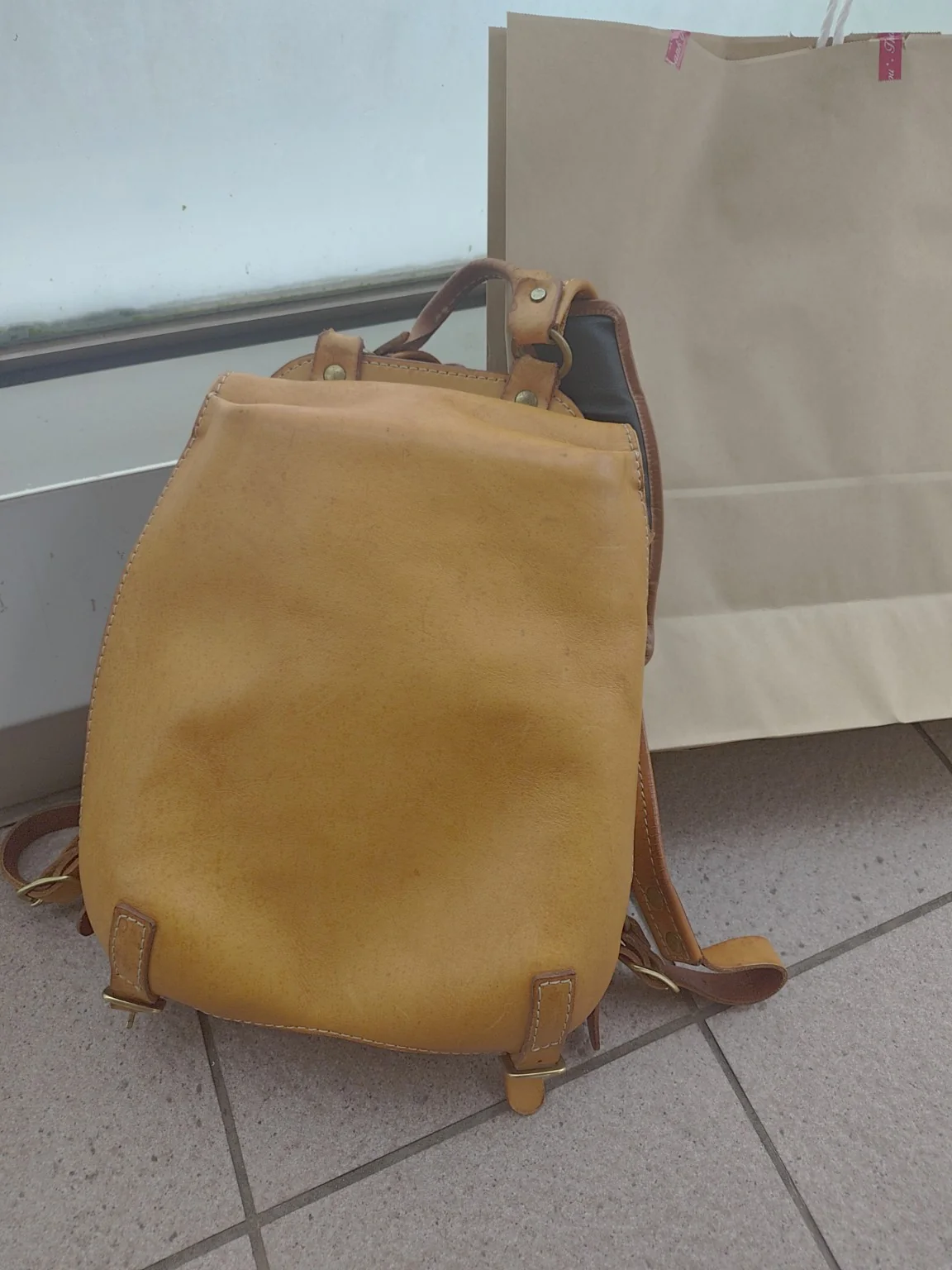
Well-loved honey-tan HERZ leather backpack with a naturally aged patina
My favorite leather backpack, softened and changed by years of use.

On the way there, something unexpected happened on the Osaka Metro Chuo Line.

Sitting opposite me was a stylish middle-aged couple who appeared to be tourists from the West.

They kept looking my way.

The man gave the woman a small, knowing glance. A moment later, she came over to me.

She spoke through the translation app on her phone.

“That’s a lovely bag.”

Then came another question.

“Can I buy one in Osaka?”

I was a little startled by the sudden voice coming from her phone, but I managed a smile and said, “Okay.”

The backpack I was wearing was my favorite — made entirely of leather.

I’ve used it for a long time, and its color has gradually changed with age and wear.

I was delighted that someone I had never met had noticed a bag I care so much about.

And here came the remarkable coincidence: the shop that sells it was close to Hommachi Station, right along the same subway line.

What were the chances?

Surprised and delighted, I couldn't help smiling.

I searched for the shop on my phone and showed her the screen.

“HERZ.”

I said the name out loud.

Her phone replied with a translated voice:

“You’re very kind.”

The words rang through the train car. I felt a little embarrassed, but mostly I felt wonderful.

Travelers from overseas really are looking for good things made in Japan.

That was what struck me in that moment.

HERZ is known for leather bags made one by one by skilled craftspeople in Japan.

That kind of careful workmanship comes at a price. These bags are certainly not cheap.

Would the couple be happy with the price?

Maybe the price tag would surprise them at first.

But if they held a bag in their hands, felt the leather, and saw the care behind it, I think they might understand its value.

And I could picture the couple wearing those bags. They would look fantastic.

Then another thought occurred to me.

In a way, this may have been my first experience of “serving” an international customer.

Of course, I didn't actually sell anything.

But someone asked me about a product, I helped them find the shop, and they even thanked me.

My own store hasn't opened yet, and somehow I'd already had a little practice.

Even when we don't speak the same language, we can still find a way to connect.

As I prepare to open MAKE KYOTO, today's encounter has given me something to think about.

Good things have the power to make people stop and look.

And perhaps, if we can share what makes something special, we can cross the language barrier, too.

I hope I'll have wonderful encounters like this at MAKE KYOTO someday.

First, I want to make things that inspire someone to stop and say, “That’s lovely.”

— MAEKEN

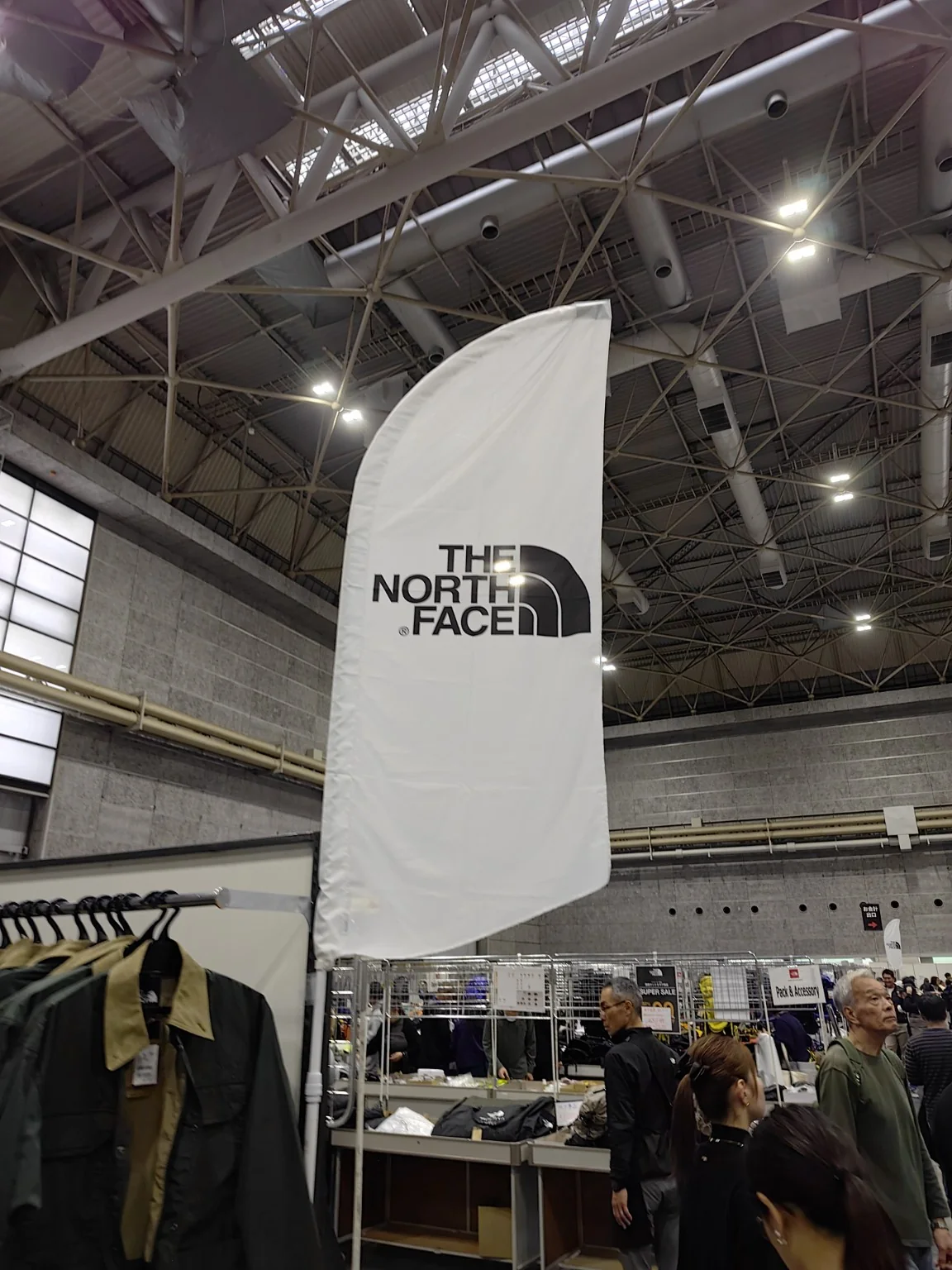
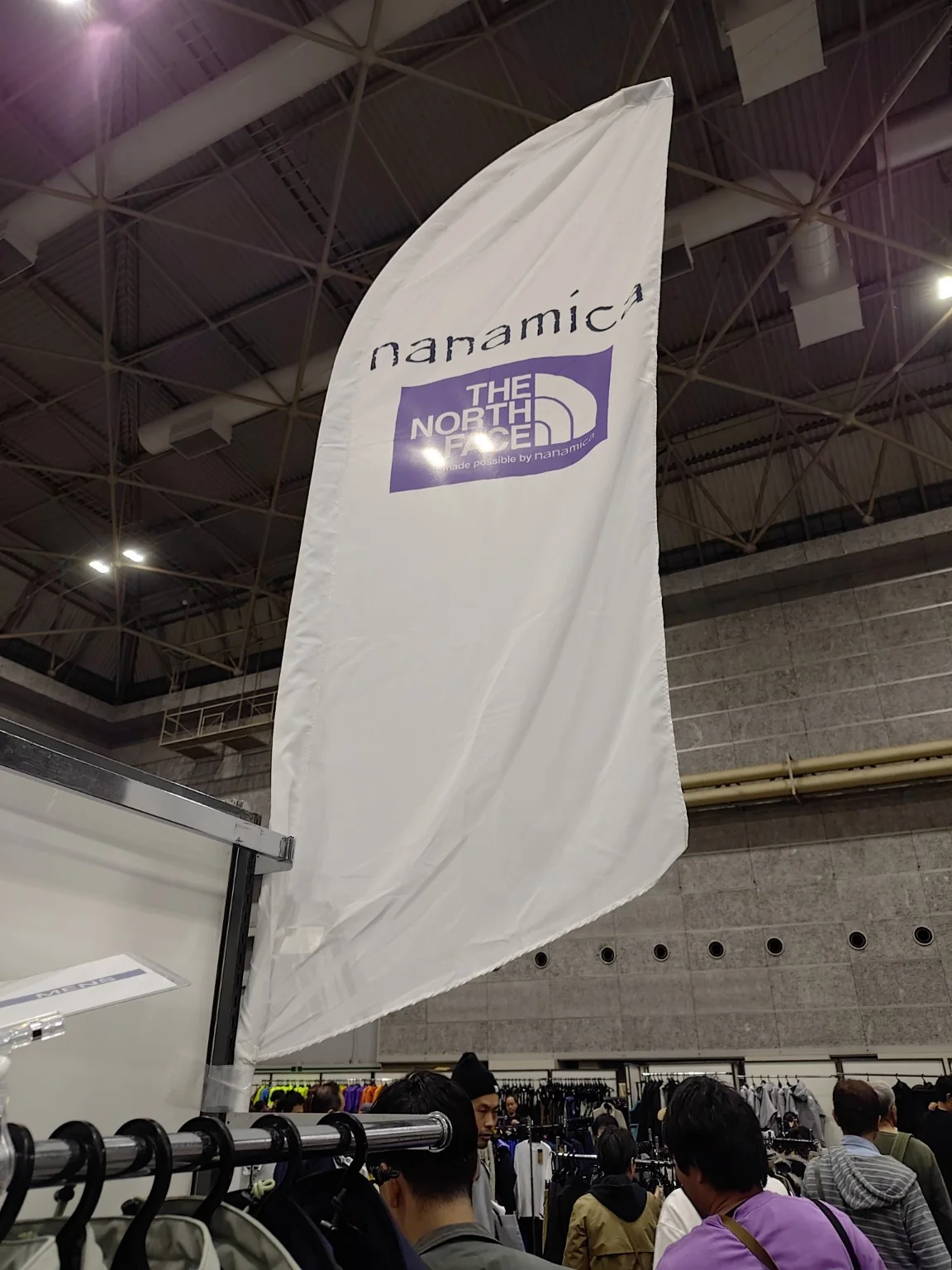
Scenes from the Goldwin family sale at INTEX Osaka.

THE NORTH FACE banner at the Goldwin family sale inside INTEX OsakaTHE NORTH FACE purple label nanamica banner at the Goldwin family sale
VOL. 10 · NOVEMBER 8, 2026

A Day of Unexpected Hits

Today, I headed to an au mobile phone shop in Umeda, Osaka, hoping to transfer data after my smartphone broke down.

But the day began with a rather painful surprise.

While I was sitting on a Hankyu train, a backpack suddenly fell from the overhead luggage rack and landed right on my head and nose.

My glasses went flying. The skin on the bridge of my nose was scraped, leaving a bruise. Later, I even started feeling pain in my neck and left arm.

You really never know what life will throw at you.

It reminded me that I should make the most of every day. Perhaps a little dramatic, but that was genuinely how I felt!

Anyway, back to the phone.

I had read that data transfer assistance usually came with a fee. I also felt a little embarrassed asking someone to do something I should have been able to manage myself.

But the woman who helped me was wonderful.

She greeted me with a warm, natural smile. When I apologized for taking up her time, she simply smiled and said, "No problem at all."

The whole process took almost two hours.

It was a busy Sunday, with customers constantly coming into the shop. She helped other people whenever necessary, yet never once looked annoyed or impatient with me.
The shop itself was spacious, with plenty of open space and a calm, welcoming atmosphere. That thoughtful use of space made the experience even more comfortable.

And in the end, she didn't charge me anything.

I left the shop feeling surprisingly happy. Even the pain from my earlier accident seemed a little less noticeable.

Her kindness reminded me of something I had learned just the day before at an entrepreneurship class.

We had been discussing social media and customer reviews.

When people receive service that goes far beyond their expectations, they naturally want to tell others about it.

And when their experience is far worse than expected, they often feel just as strongly about sharing their disappointment.

Today, I experienced the positive side of that lesson firsthand.

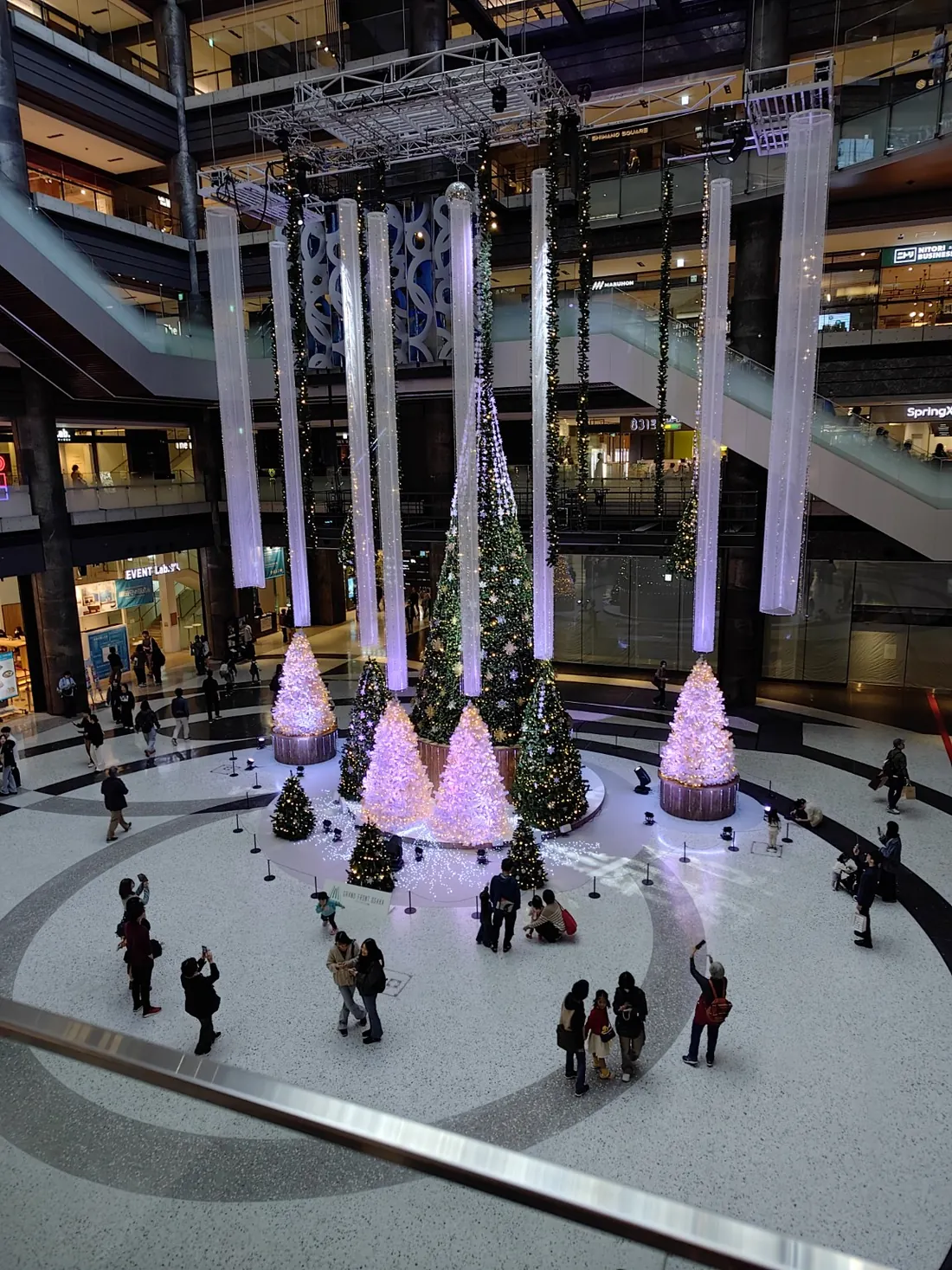
On my way home, I stopped by Grand Front Osaka.

The shopping complex was already decorated for Christmas, with beautiful trees sparkling in soft white and purple lights.

Christmas trees and festive lights at Grand Front Osaka, seen from an upper floor
Christmas lights at Grand Front Osaka.

Families were taking pictures, children were enjoying the decorations, and the whole place felt festive.

It's only early November, but the city is already getting ready for the end of the year.

What had started as a rather unlucky day had turned into a surprisingly pleasant one.

It also reminded me of something important about the little shop I hope to open in Kyoto.

A good product matters, of course. But so does the experience of visiting the shop.
A friendly conversation, a thoughtful gesture, a genuine smile — these little things can become lasting memories.

The idea behind MAKE KYOTO is simple:

“Take home a memory.”

I hope that visitors will take home not only a T-shirt, but also a happy memory of the time they spent in my shop.
Today, I learned something valuable about the kind of shopkeeper I want to become.

And looking back, it really was a day of unexpected hits — both good and bad!

Maybe I should buy a lottery ticket tomorrow.

Who knows? My luck might still be running!

— MAEKEN

VOL. 09 · NOVEMBER 7, 2026

What Makes Us Different

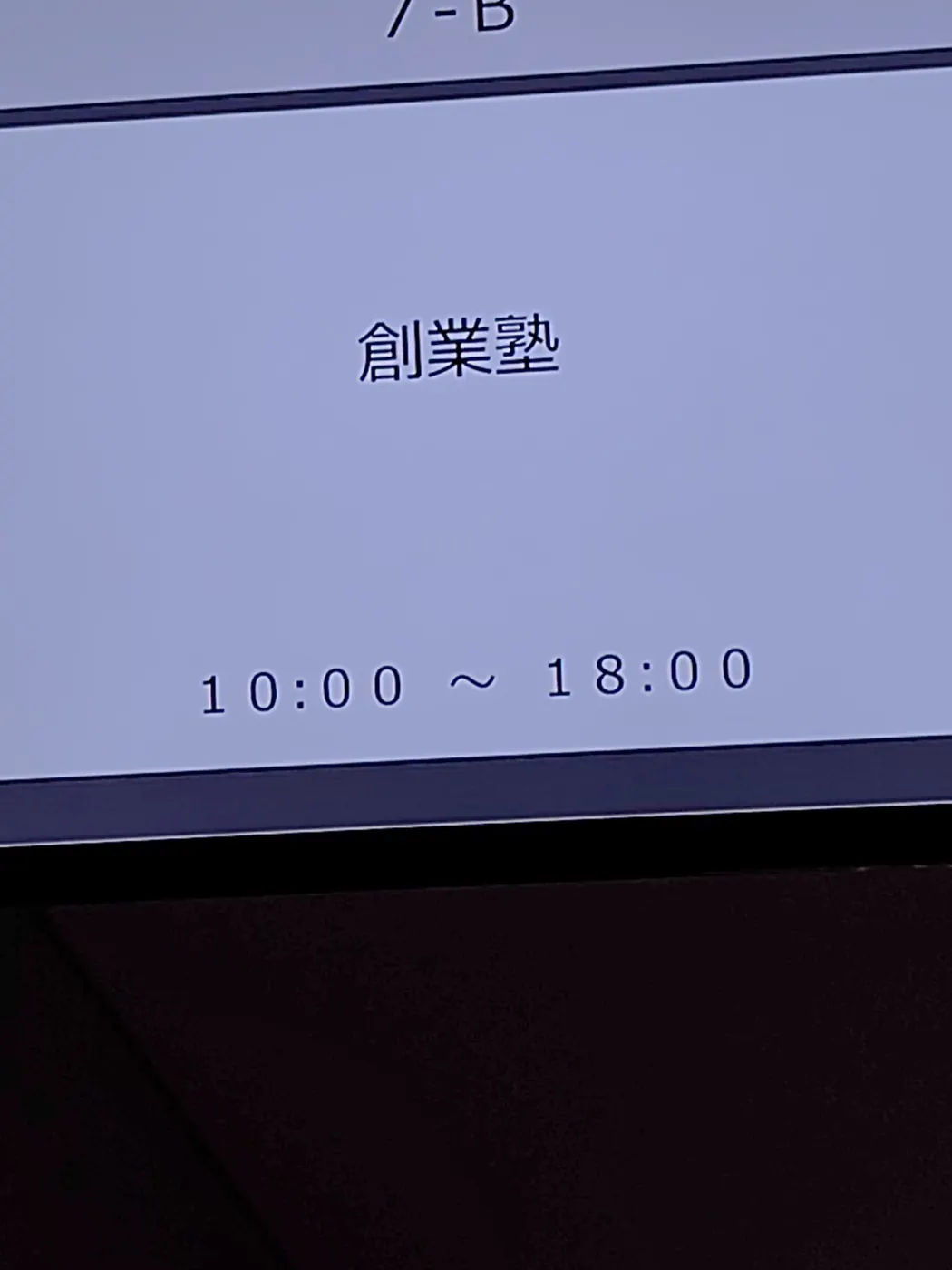
Today was the second day of my entrepreneurship course in Kyoto.

One lesson particularly stayed with me: small businesses need to clearly communicate what makes them different, and why that difference matters.

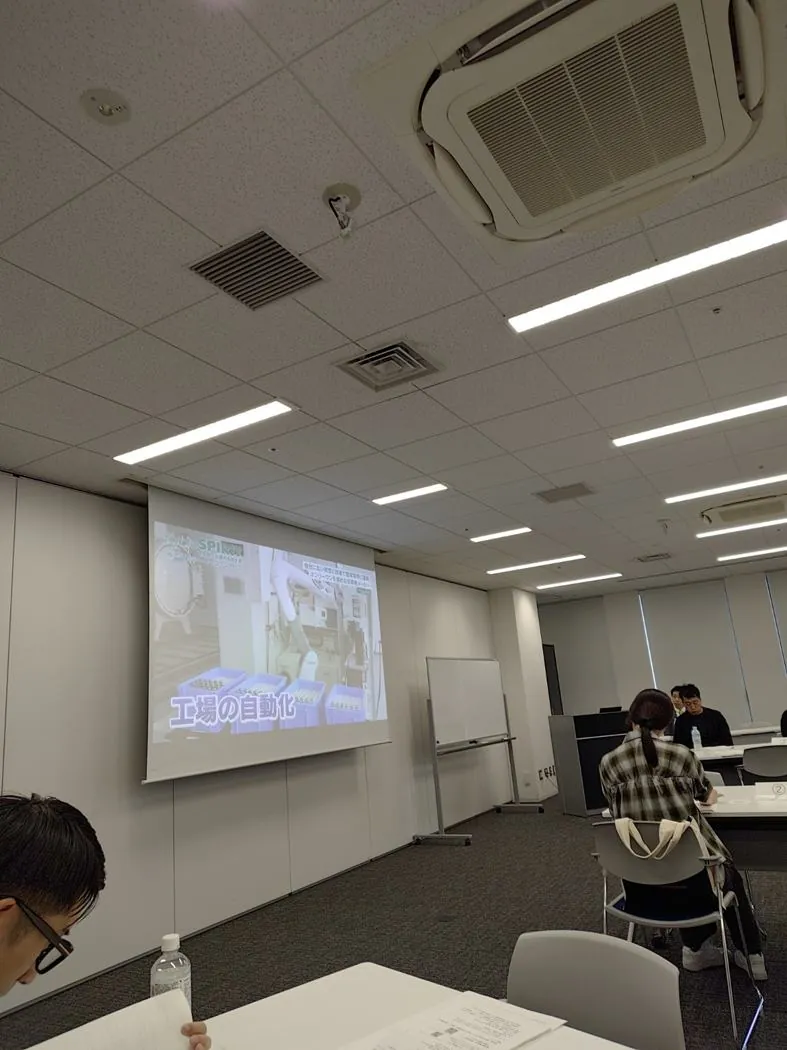
Entrepreneurship course sign on the classroom screen in Kyoto
Another full day at the entrepreneurship course.

It made me think again about MAKE KYOTO. Our T-shirts use fabric made in Japan and are sewn in Japan. That genuine Japanese craftsmanship is rare, but it is not the whole story.

For over 30 years, I have worked as a newspaper editor, choosing words, creating headlines and arranging them on pages. Now I want to apply that experience to Japanese words and kanji — creating designs full of meaning, rhythm and a little humor.

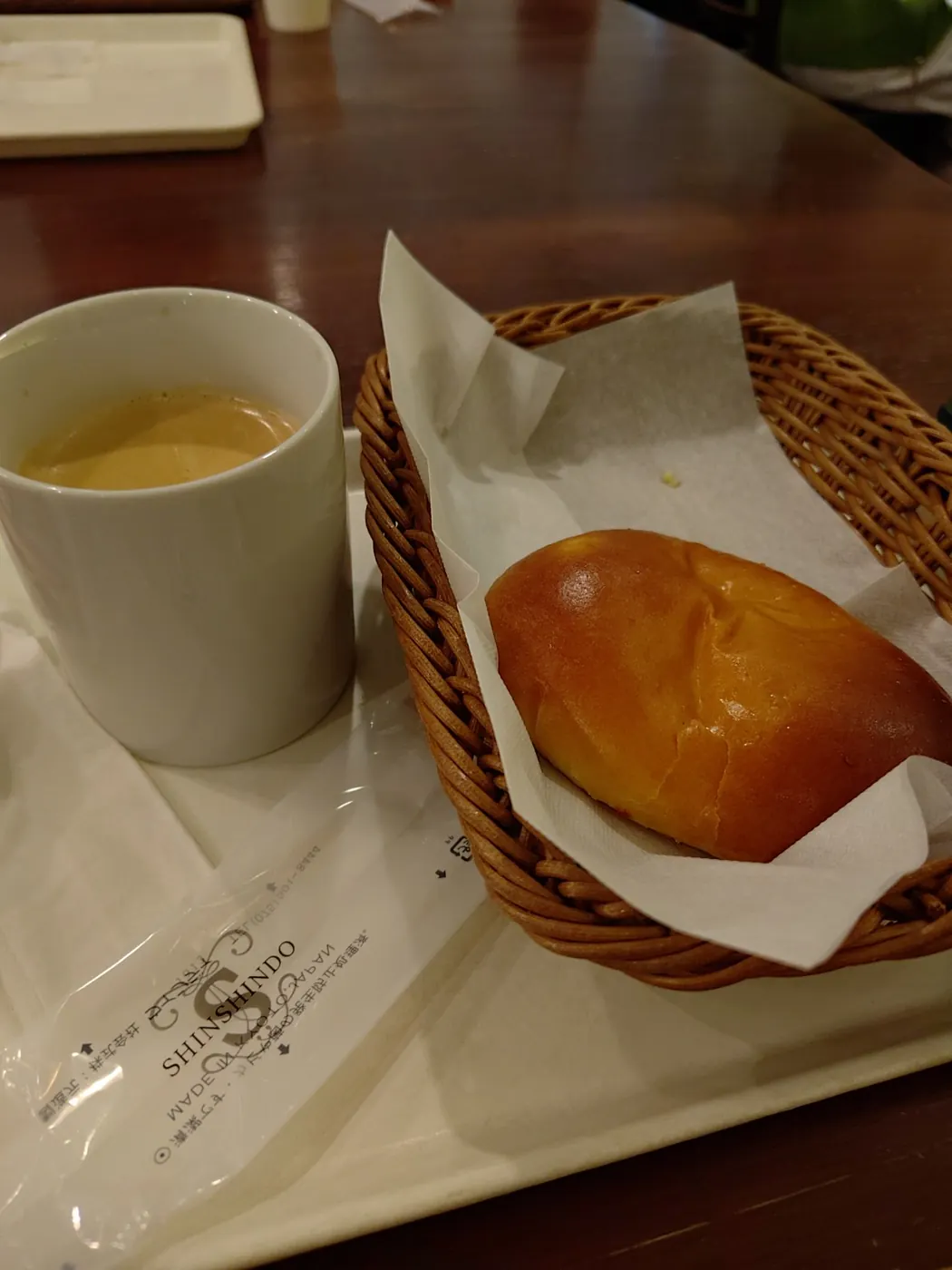
During the lunch break, I stopped by Shinshindo for some bread and coffee. A quiet, welcome moment in a day full of new ideas.

Bread in a wicker basket and coffee at Shinshindo bakery in Kyoto
A simple lunch at Shinshindo, Kyoto.

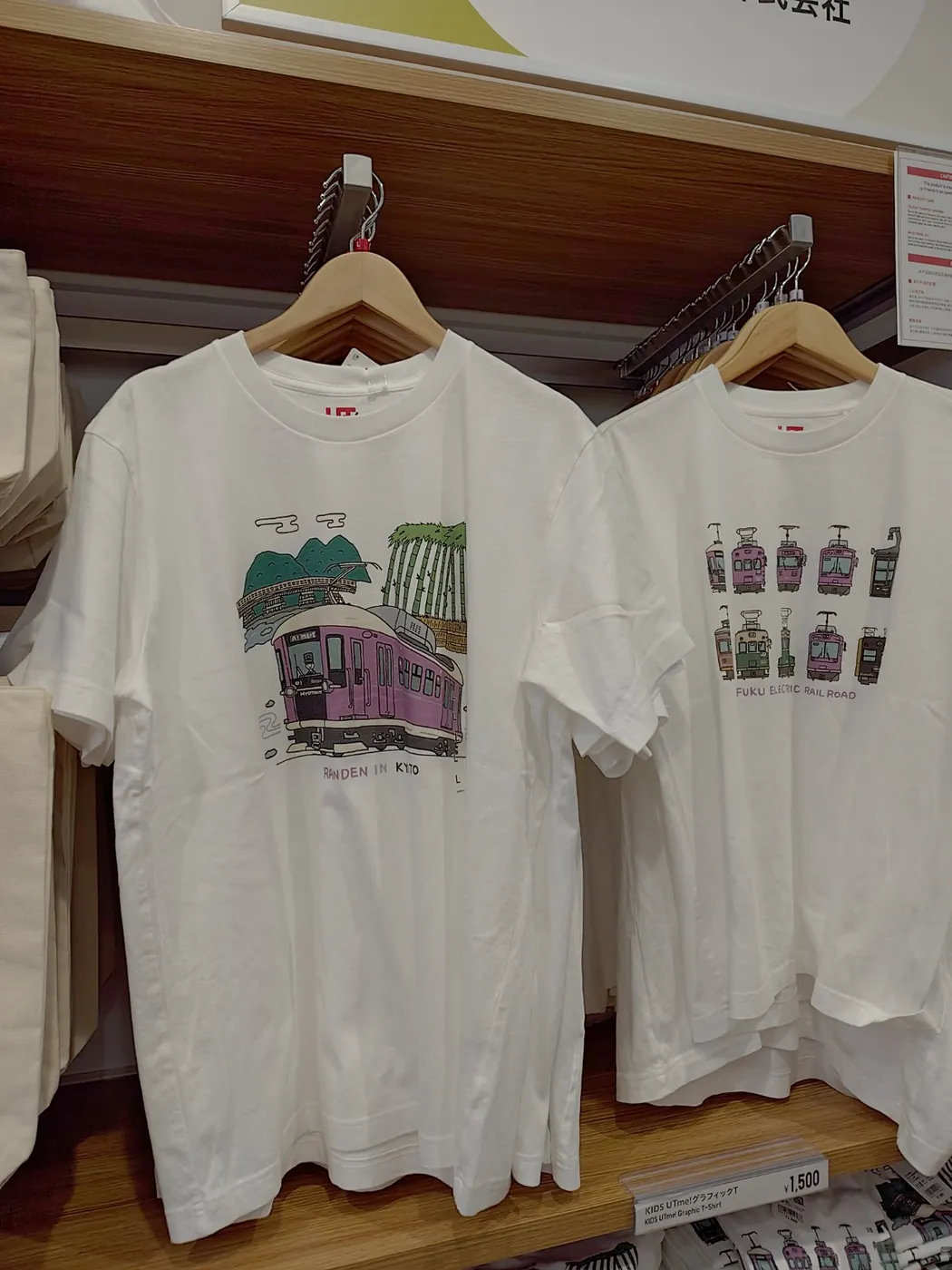
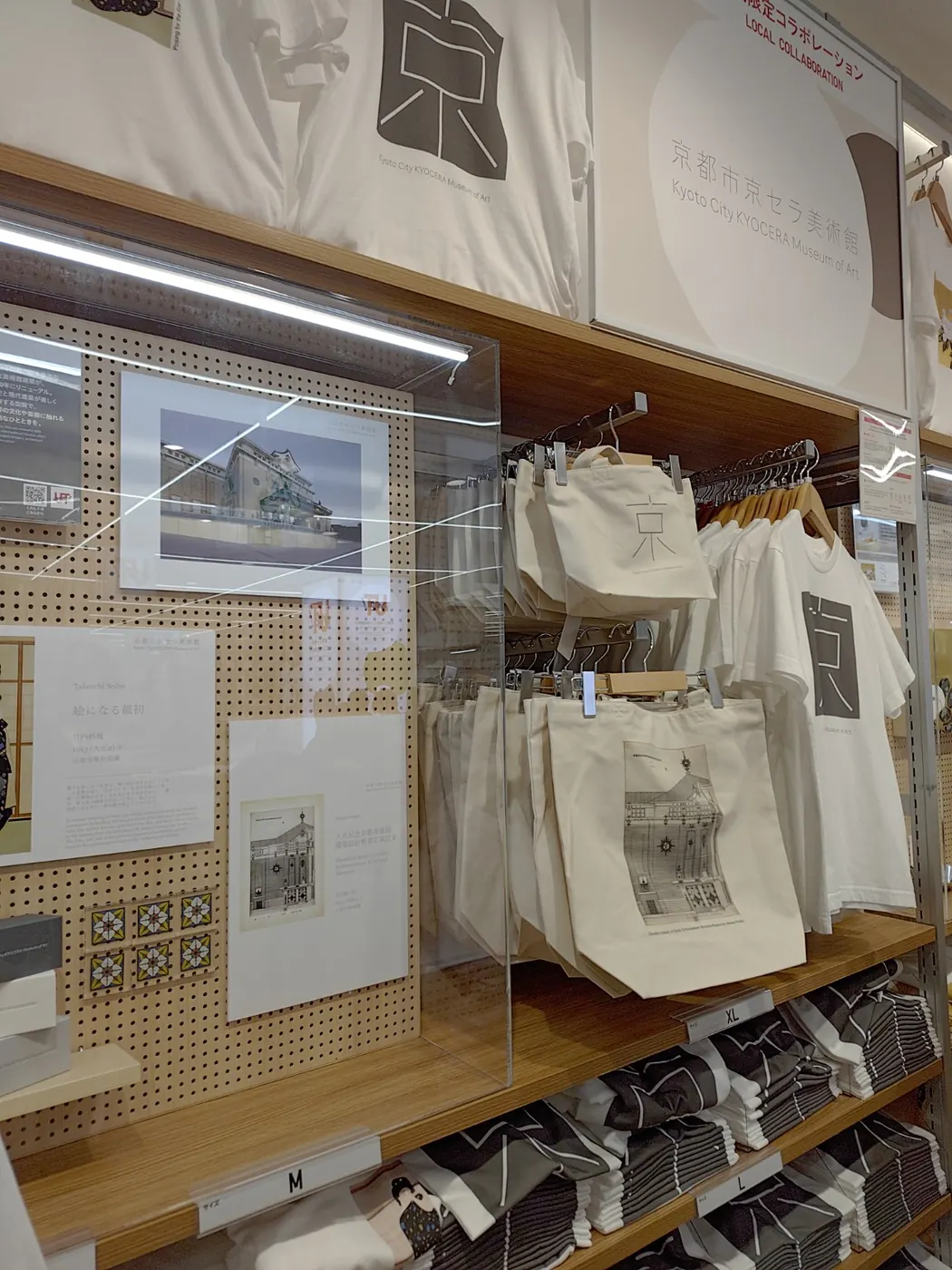
On my way home, I visited UNIQLO Kyoto, which had reopened the day before, November 6. There were rows of Kyoto-inspired T-shirts and tote bags, including collaborations with local businesses and cultural institutions. The selection was impressive, and the prices were affordable.

Kyoto local railway illustration T-shirts displayed at UNIQLO Kyoto
Kyoto's local railway featured on T-shirts.
A T-shirt and tote featuring the Japanese kanji character for Kyoto at UNIQLO Kyoto
Even a single kanji can become a design.

Seeing these products brought today's lesson into focus. MAKE KYOTO cannot compete with a global brand on price or scale — and that is not the goal.

I want to offer something different: genuinely Japanese-made T-shirts, original designs born from decades of working with words, and the experience of adding your own personal touch.

Not just another souvenir, but a memory made your own.

From a tiny shop in Kyoto, I hope to share Japanese words, craftsmanship and creativity with travelers from around the world.

A tiny shop. A world of stories.
— MAEKEN

VOL. 08 · NOVEMBER 3, 2026

The 1,001st Line

Today, I went for a run near my home.

Along my familiar route, the trees are slowly changing color, and more migratory birds are gathering on the water. The seasons keep moving forward, quietly but surely.

Autumn colors emerging among the trees along a neighborhood running route
The colors of autumn, slowly appearing.
Waterbirds scattered across a rippling pond in early November
More birds gathering on the water.

Usually, I might simply enjoy these small changes and continue on my way. But this year, they feel a little different.

After spending so many years in a familiar environment, I'm preparing to step away from it and take on something new. As I work toward opening MAKE KYOTO, even the passing of time feels special.

Lately, I've been listening to Sense of Wonder by the Japanese band sumika while I run. It may be a song that speaks especially to younger people. But even as I approach 60, its message reaches me.

One image from the song stays with me: a notebook already filled with a thousand lines, and the courage to begin line 1,001.

The years I've spent learning, working, and finding my way do not disappear when I start something new. They are part of what makes the next step possible.

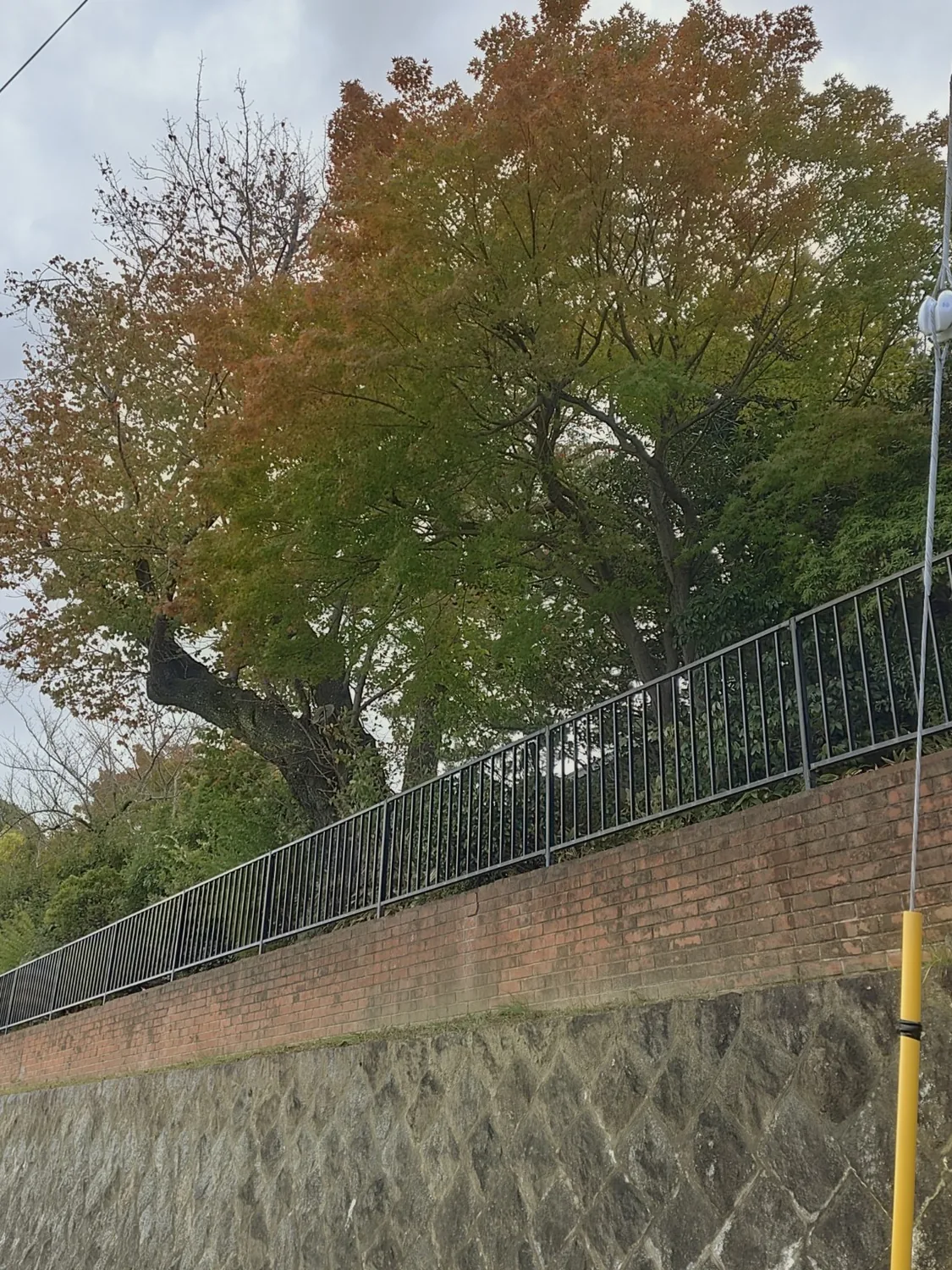
Tall trees turning from green to warm autumn colors beside a stone wall
Even a familiar view changes with the season.

As the leaves change and the birds arrive, I feel myself moving toward a new season, too.

I'm looking forward to meeting a version of myself I haven't seen yet. So today, I keep moving forward.

— MAEKEN

VOL. 07 · NOVEMBER 1, 2026

The Space Changes the Experience

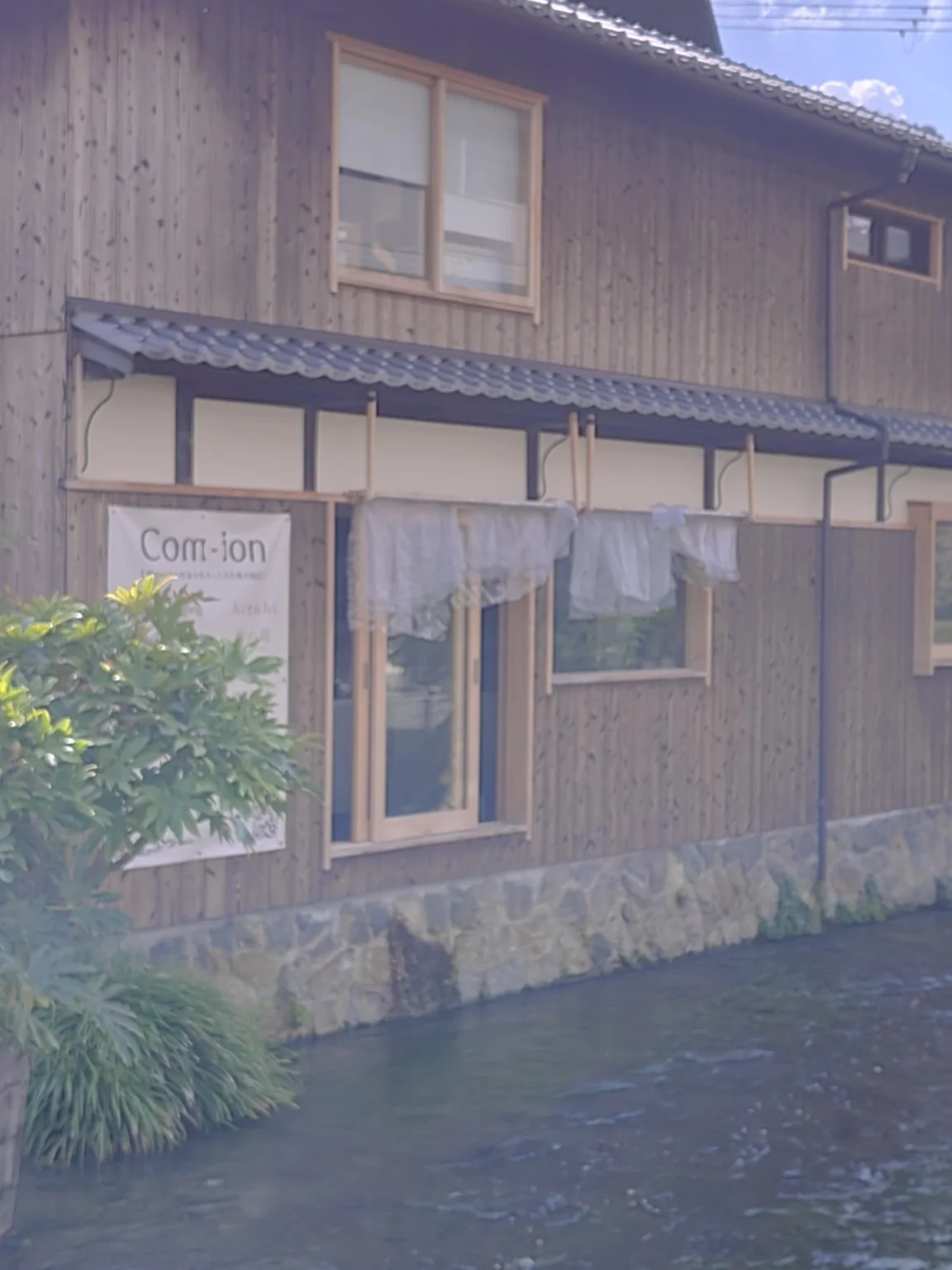
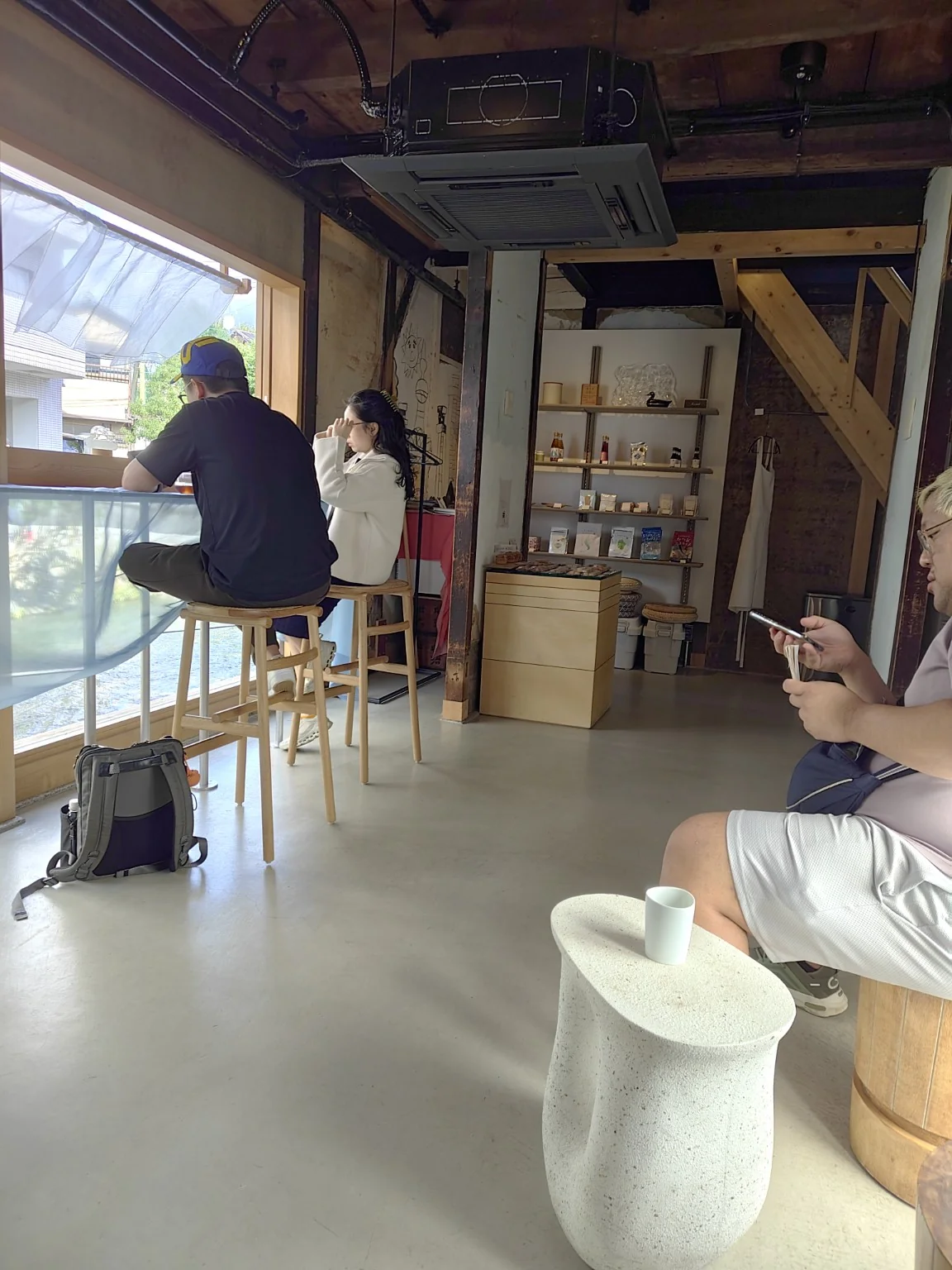
Yesterday's pop-up café was held in a truly wonderful place.

Sitting upstairs, watching the stream flow by and people strolling along its banks, I enjoyed delicious pastries and coffee. It was a simple moment, but it felt like the ultimate luxury.

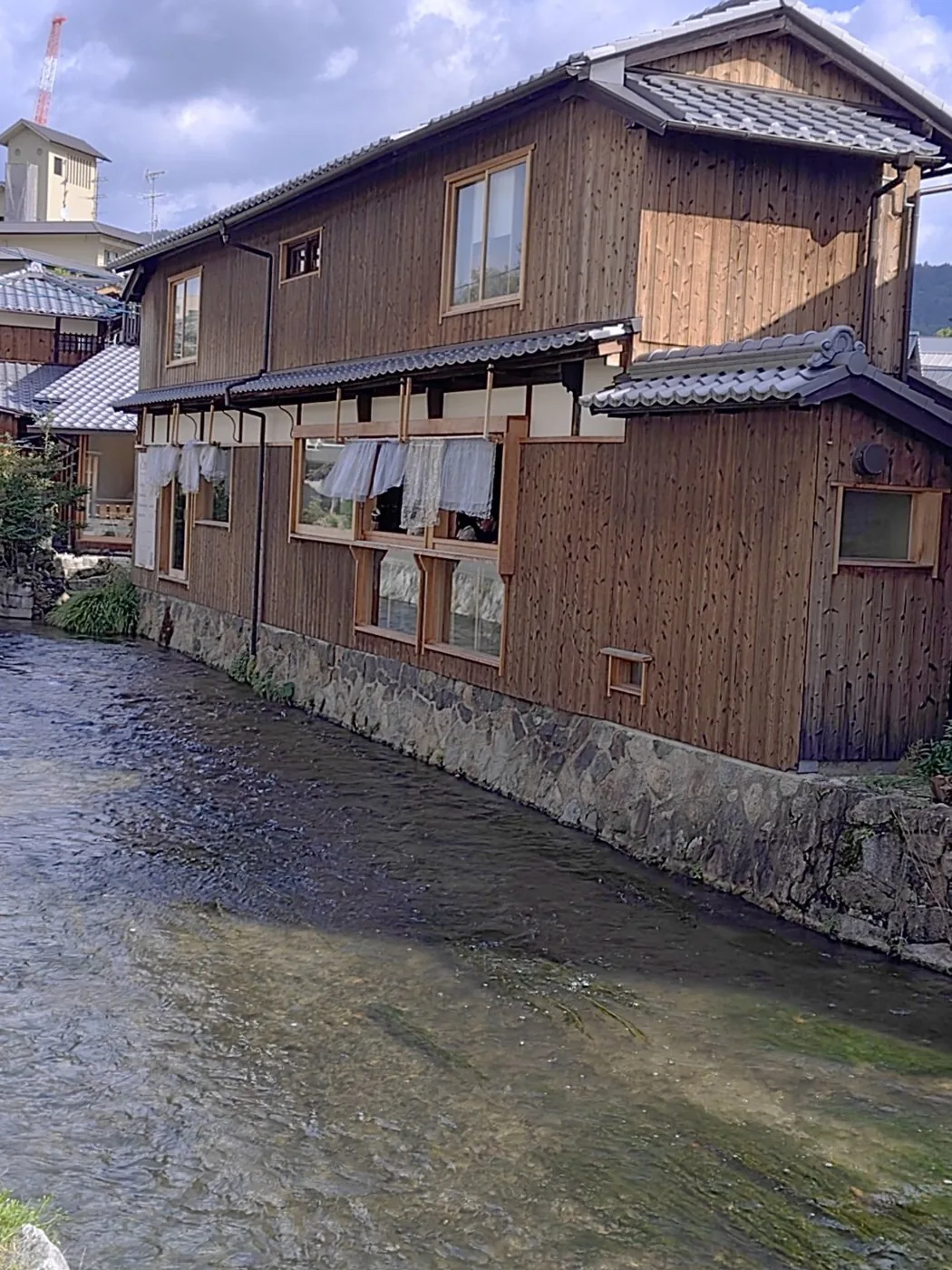
Traditional wooden Kyoto building overlooking a clear flowing stream
A peaceful stream beside the café.
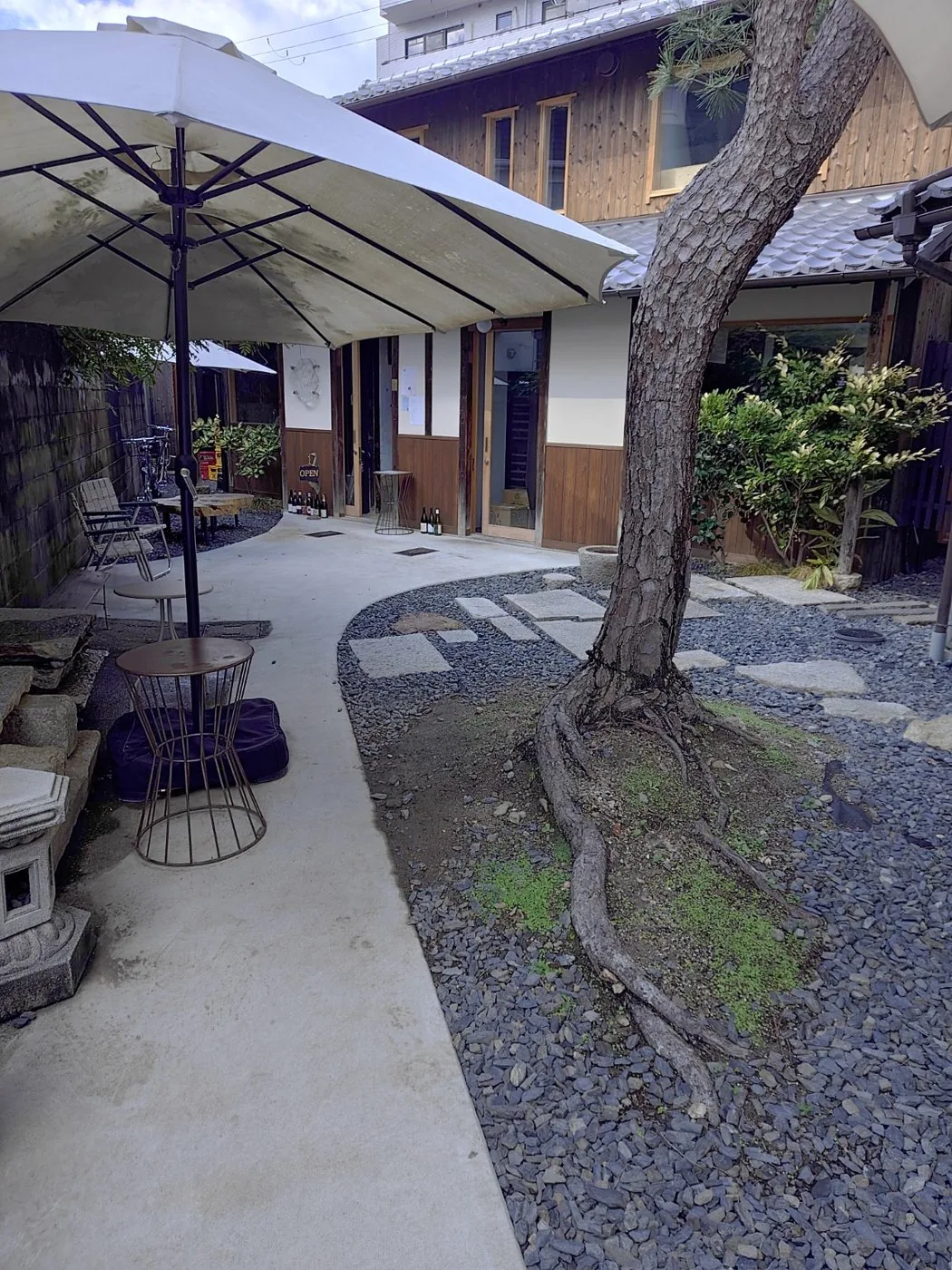
Quiet courtyard at the traditional Kyoto café, with a tree and outdoor seating
The calm courtyard at Com-ion.

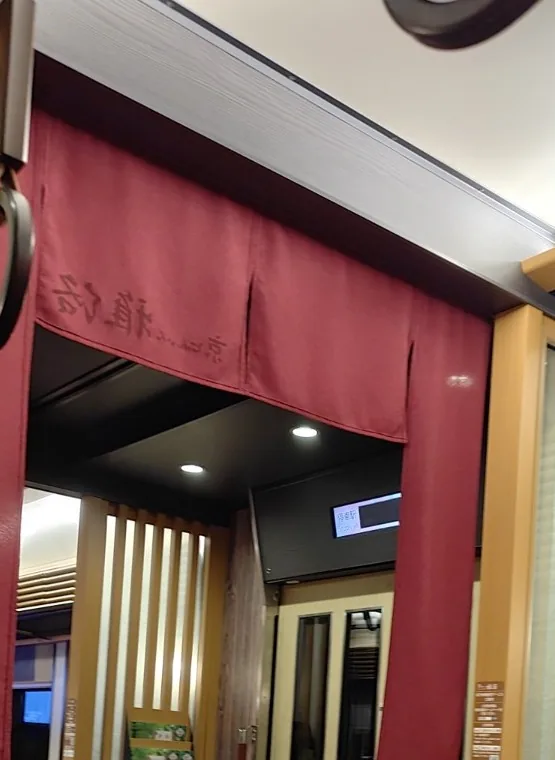
On my way home, I was lucky enough to ride Hankyu Railway's Kyo-train, a special train with a beautiful Japanese-style interior.

There's no extra fare, yet its thoughtful design makes an ordinary ride feel a little special. The visitors from overseas on board seemed to be enjoying the experience, too.

Traditional fabric curtain at the entrance to a Japanese-style carriage on Hankyu's Kyo-train
The Japanese-style entrance inside the Kyo-train.
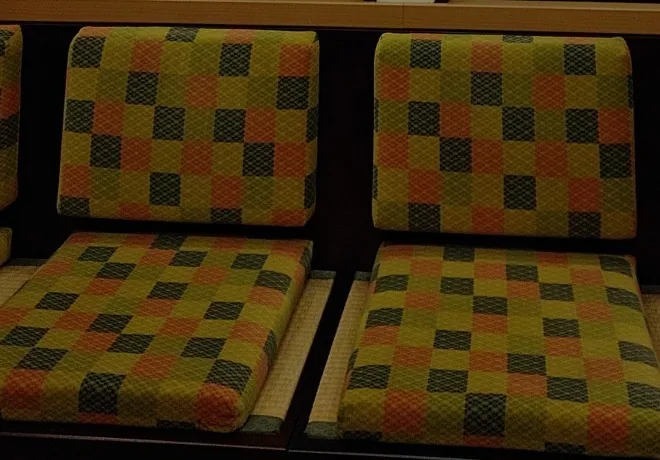
Close-up of the patterned seats inside Hankyu Railway's Kyo-train, with no passengers visible
Even the seats have their own character.

Two very different places, but both reminded me of the same thing.

A thoughtfully designed space can turn an ordinary moment into a special memory.

Another valuable lesson as I imagine the atmosphere of my future MAKE KYOTO shop.

VOL. 06 · OCTOBER 31, 2026

The Value of Empty Space

The entrance to Com-ion, a traditional house in Kyoto
Com-ion, a traditional house in Kyoto.

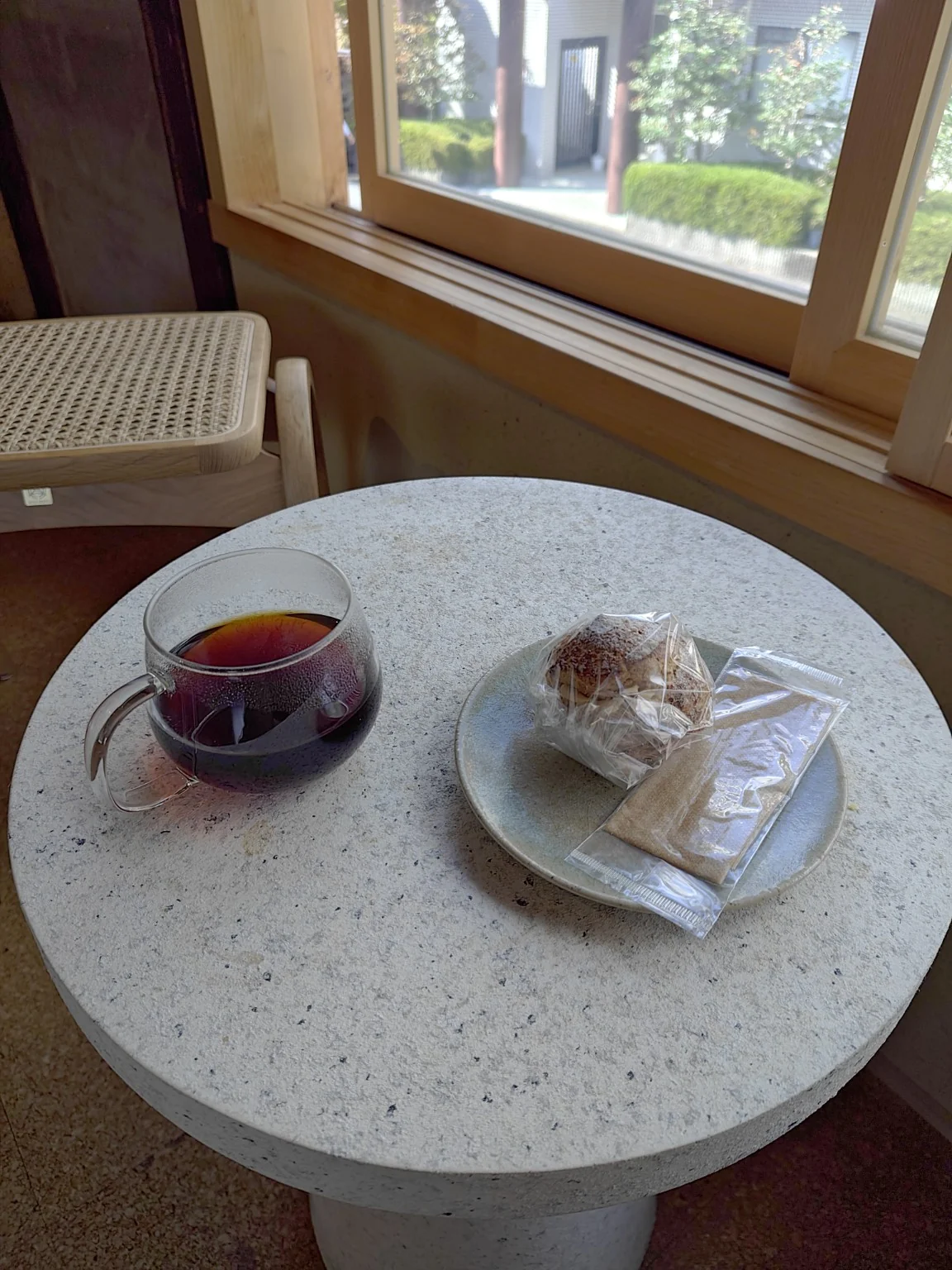
Today, I visited a pop-up café run by a pastry chef I met at an entrepreneurship workshop.

The café was held at Com-ion, a beautiful traditional Japanese house in Kyoto.

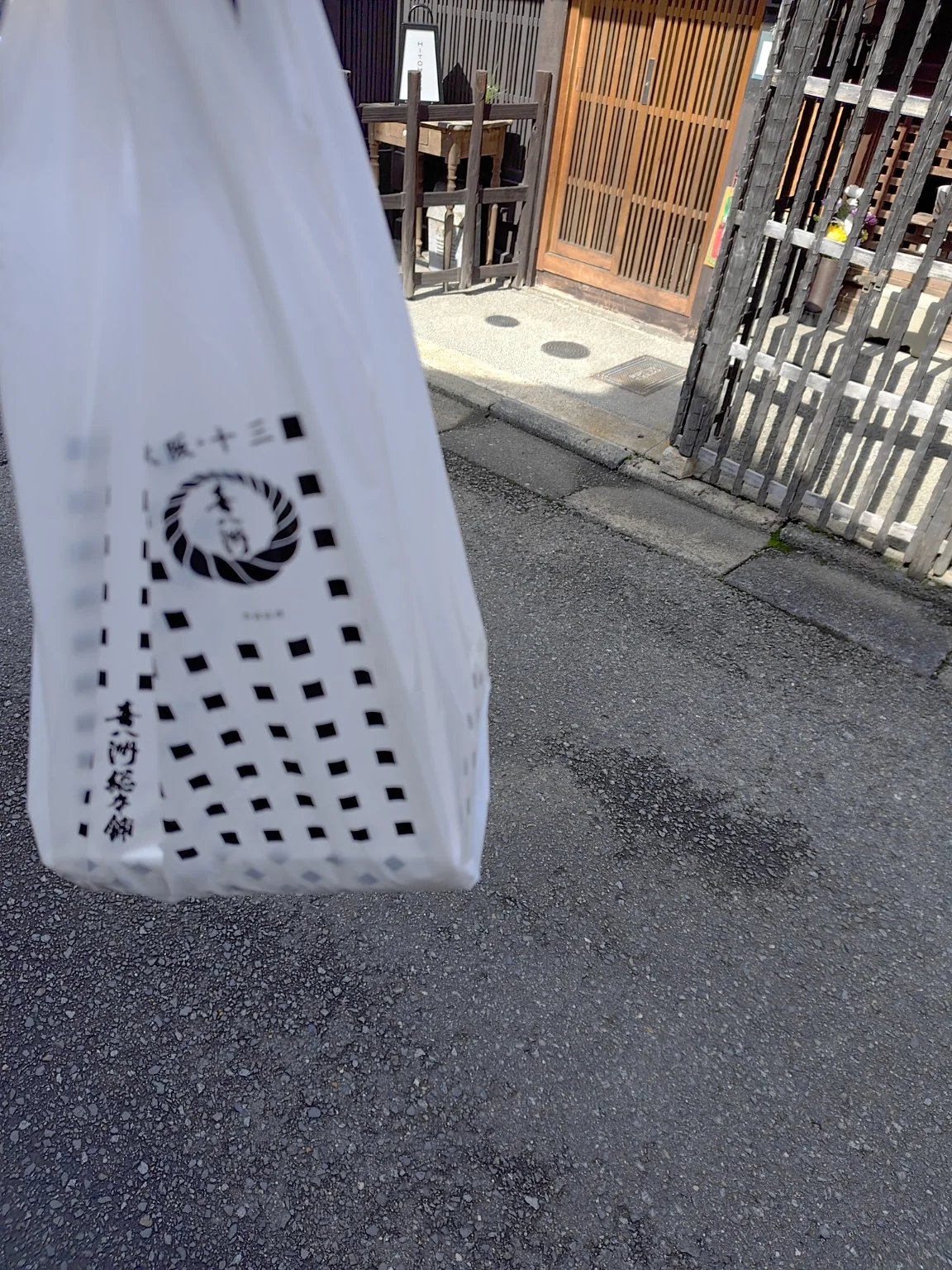
On my way there, I picked up some mitarashi dango, sweet and savory rice dumplings, from Kiyasu in Juso, Osaka. I thought it might be more interesting to bring a traditional Japanese treat to someone who makes Western-style pastries.

A bag from Kiyasu in Juso, Osaka
A little gift from Kiyasu in Juso.

The pastries were, of course, absolutely delicious.

But what stayed with me most was how the space itself made everything look and feel even more special.

The warm wooden interior of Com-ionPastry and tea by a window at Com-ion

The calm atmosphere of the old house. The thoughtful arrangement of things. And the empty space around them.

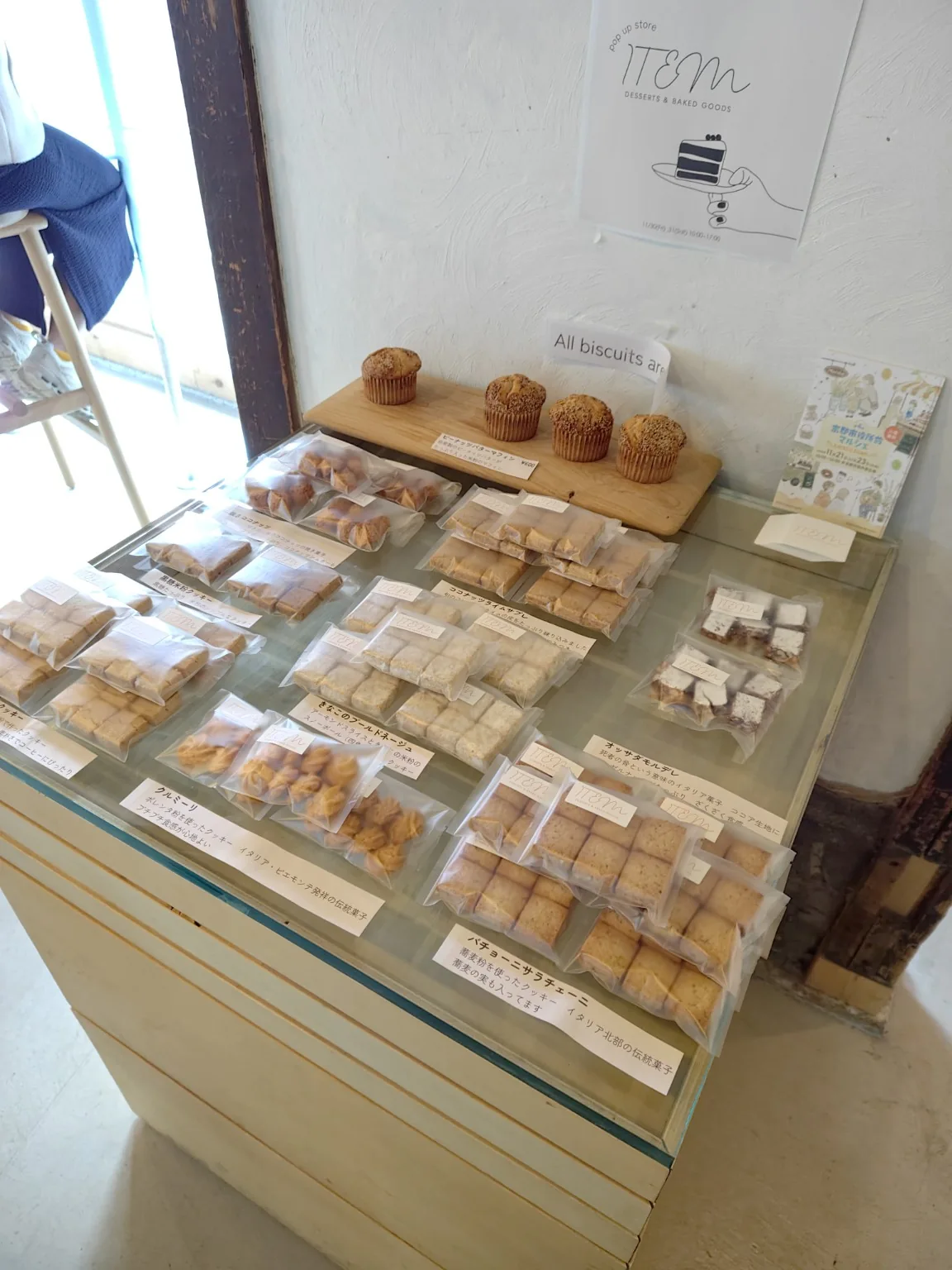
Handmade muffins and packaged baked goods at the pop-up café
Baked goods at the pop-up café.
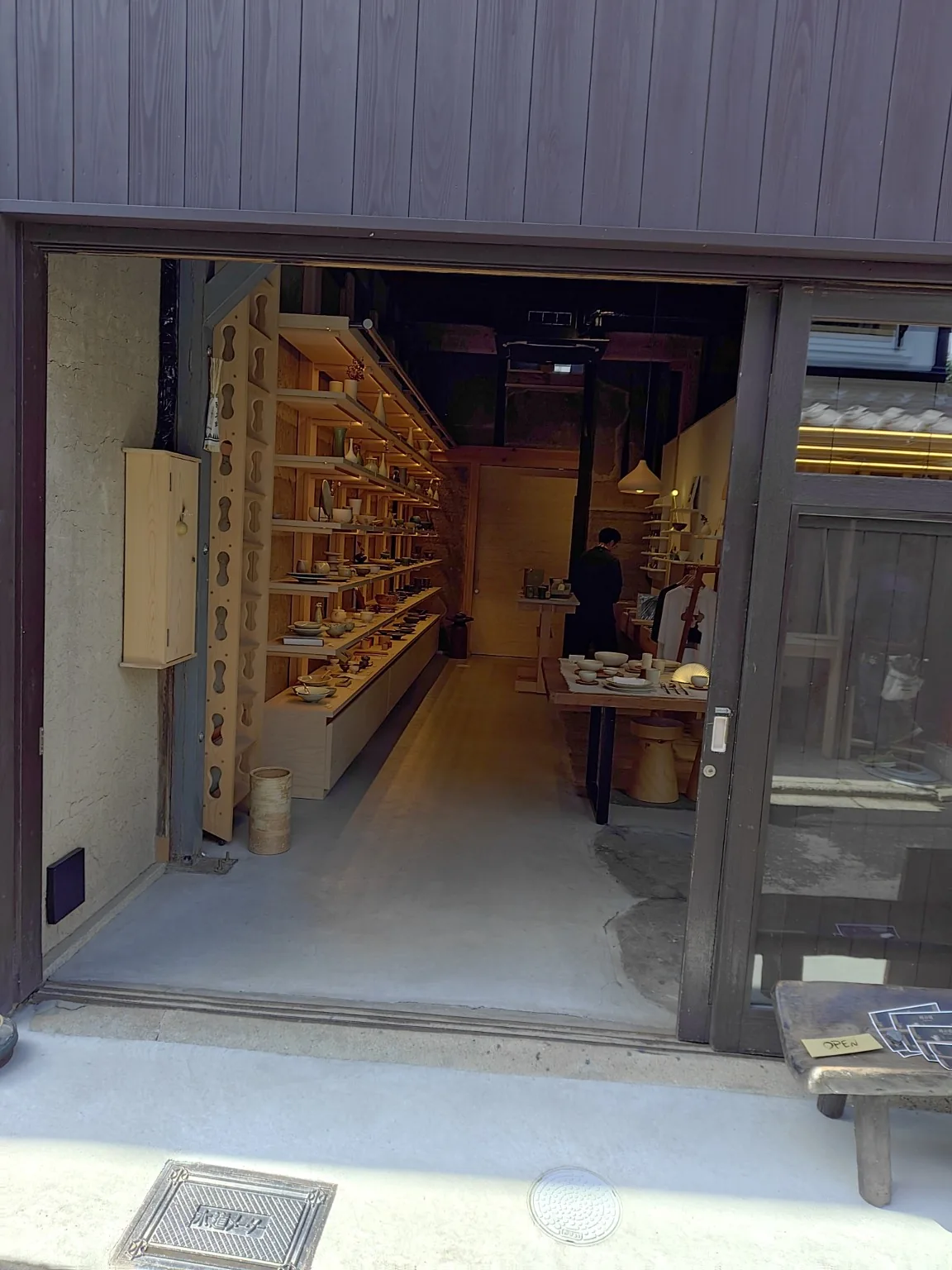
Open doorway to a pottery shop with carefully arranged ceramics on wooden shelves
A pottery shop in Kyoto — another example of thoughtful display.

Even a wonderful product can leave a different impression depending on how and where it is presented.

During my years as a newspaper editor, empty space was an essential part of page design. Filling every corner with words and photographs was never the goal. Sometimes, leaving space was the best way to make something stand out.

I believe the same idea applies to the little shop I hope to create.

A good shop doesn't necessarily need to display as many products as possible.

I want to create a space where each word, each design, and each item has room to speak for itself.

A small discovery on a beautiful autumn day.

VOL. 05 · OCTOBER 26, 2026

A First Step Toward Making Our T-Shirts in Japan

Today, I visited an apparel manufacturer in Osaka for my very first meeting about creating original, made-in-Japan T-shirts for MAKE KYOTO.

I'm completely new to the apparel industry. My shop hasn't opened yet. I have no track record, and I don't even have a finished product to show.

And yet, the people I met listened to my ideas with such genuine interest, patience, and care.

We talked about fabrics, silhouettes, comfort, and my desire to create something truly made in Japan. Before I knew it, a great deal of time had passed.

I was deeply grateful that they took the vision for my little shop, which doesn't even exist yet, so seriously.

More than anything, I left feeling that someone had given me a gentle push forward.

There is still a long way to go. Next come fabric selections, estimates, and many more decisions.

My hope is to create a T-shirt that visitors to Kyoto will take home as a memory of their journey — and still want to wear long after they've returned to their own countries.

Today felt like an important first step toward making that happen.

VOL. 04 · OCTOBER 25, 2026

A Rainbow to Start the Day

A double rainbow across a colorful morning sky
Illustrative recreation of the morning rainbow; surroundings omitted for privacy.

I woke up early this morning and saw an enormous rainbow stretching across the sky. What a beautiful surprise!

I wonder if it means good things are on their way. With so much to prepare before opening MAKE KYOTO, I would certainly like to think so.

A small moment of happiness to start the day. — MAEKEN

VOL. 03 · OCTOBER 25, 2026

Learning About the Art of Japanese T-Shirts

In an earlier note, I shared a book I have been reading about T-shirts. The more I read, the more I realize how much I still have to learn.

I have gained a new appreciation for the care, skill, and attention to detail behind Japanese clothing — from the fabric and the neckline to the way a T-shirt feels when you put it on.

I hope visitors from around the world will be able to experience that comfort for themselves through MAKE KYOTO.

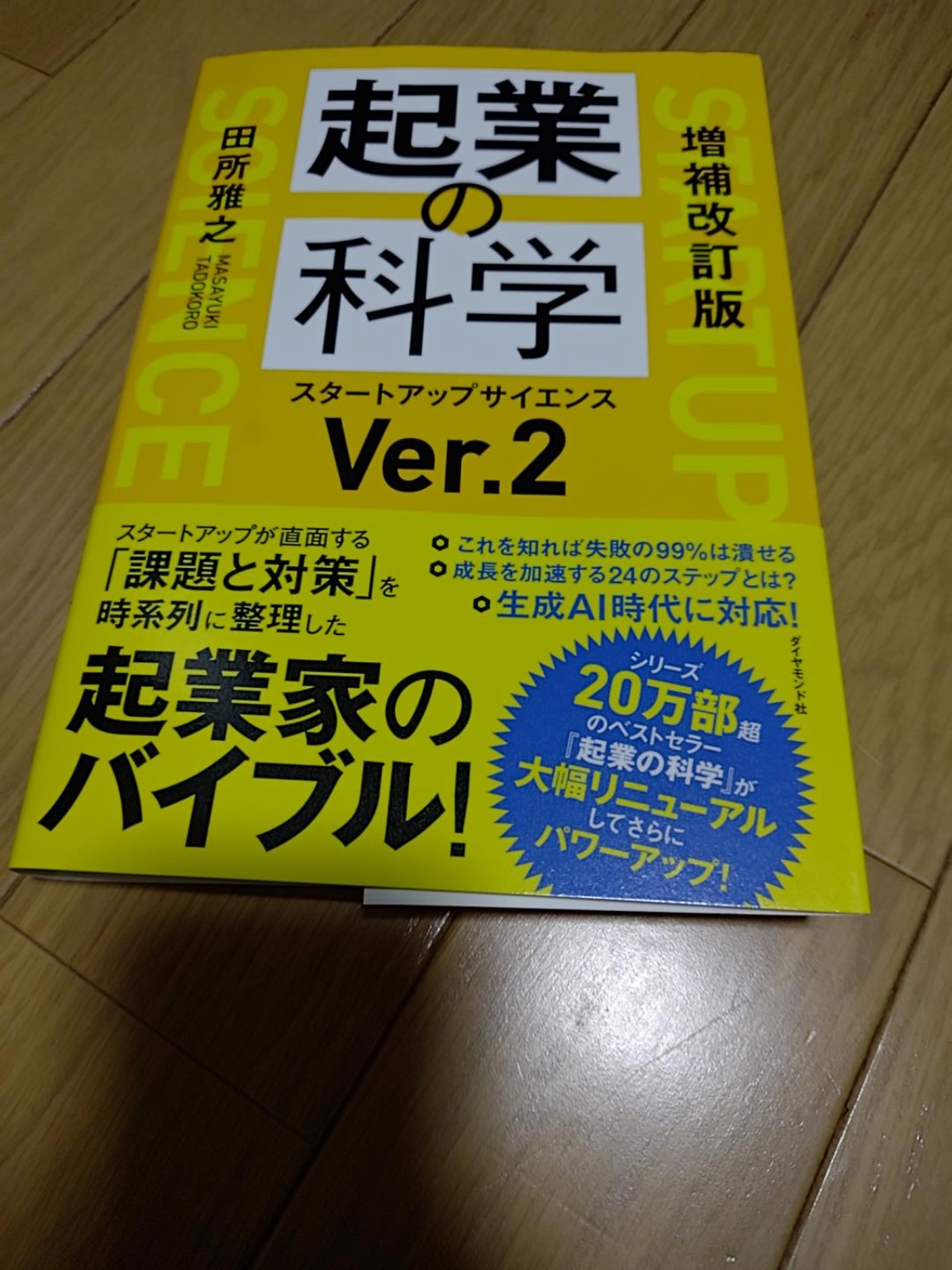
The Science of Startups Ver.2 by Masayuki Tadokoro
A book recommended by a former colleague who started his own business.

Meanwhile, a former colleague who started his own business recommended another book: The Science of Startups (Kigyo no Kagaku) by Masayuki Tadokoro. To be honest, I have barely started it.

After more than 30 years working for a company, I still have a lot to learn about running a business — especially the financial side, which has never been my strongest subject! One step at a time. — MAEKEN

VOL. 02 · OCTOBER 24, 2026

My First Day at Startup School

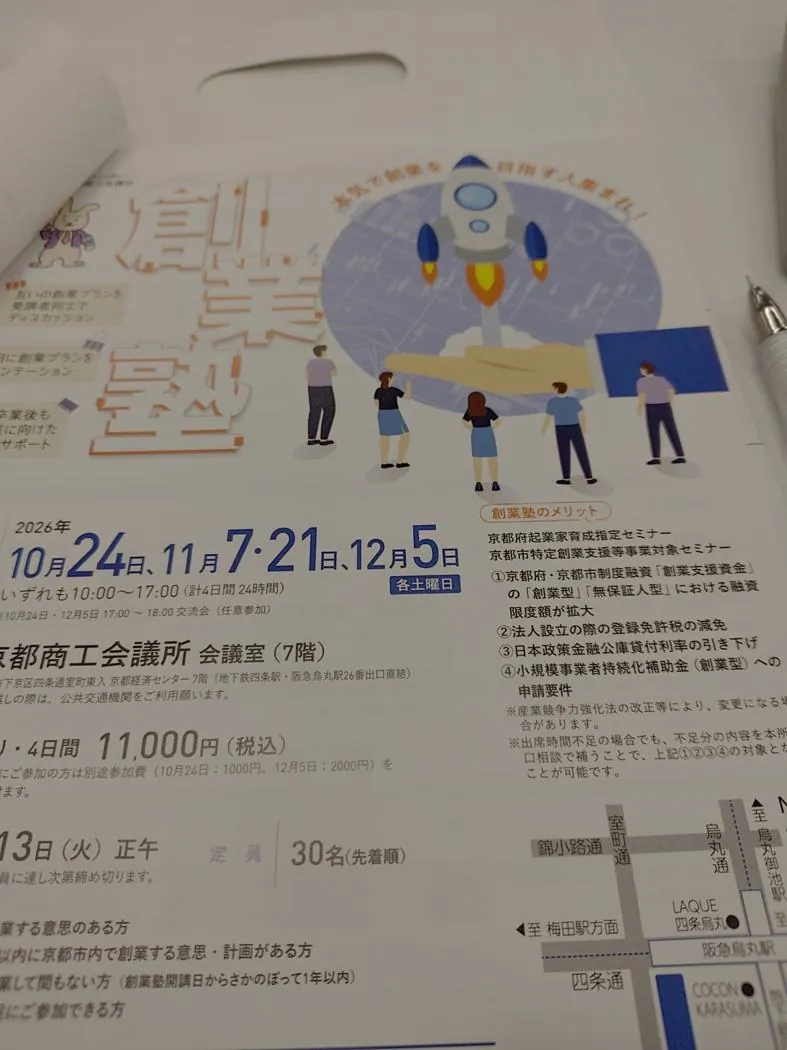
Today was the first day of the startup course organized by the Kyoto Chamber of Commerce and Industry.

I was so eager to get started that I mixed up the starting time and arrived an hour early. Perhaps I was a little too enthusiastic!

I was nervous at first, but everyone in my group was kind and welcoming. They all had thoughtful, well-developed business plans, and I suddenly felt that my own idea was rather simple.

Still, much of what we learned followed the same path I have been considering as I prepare to open MAKE KYOTO. That gave me some reassurance that I may be heading in the right direction.

More than anything, meeting new people who are also taking their first steps toward starting a business was the best part of the day.

I feel as though I've taken another small step forward. Now, let's keep going!

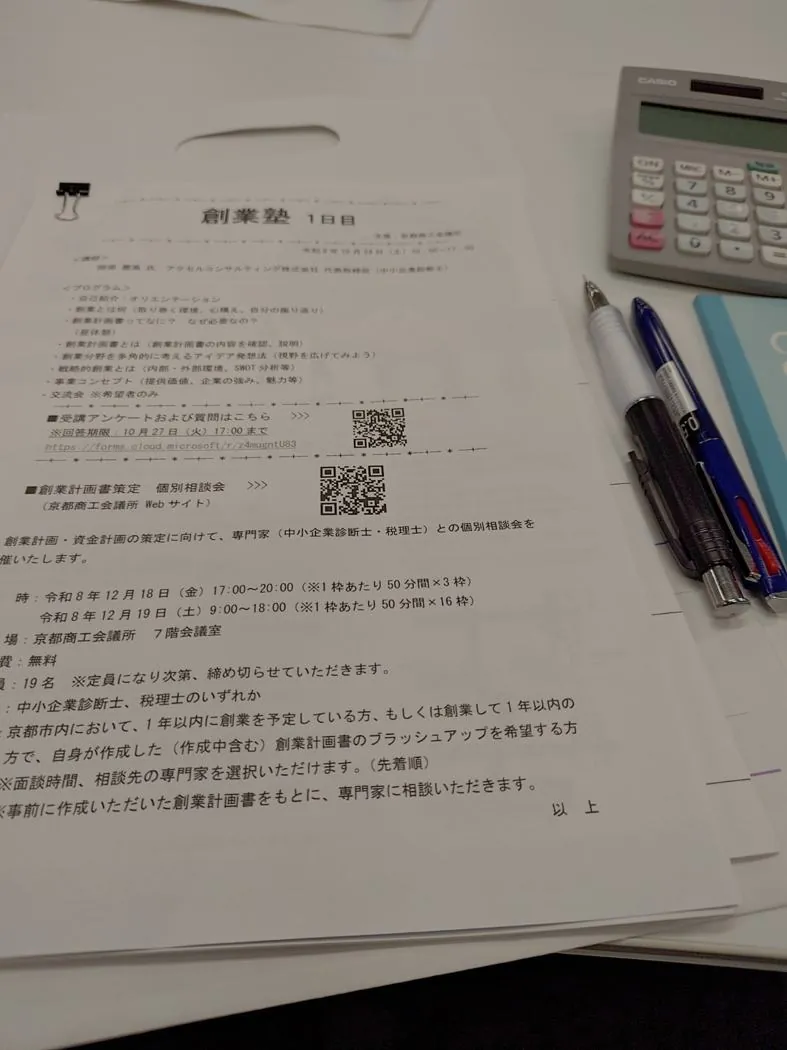
The first session of the Kyoto startup courseStartup course brochure and event detailsHandouts for the first day of the startup courseThe startup course listed at the Kyoto Chamber of Commerce and IndustryThe venue of the startup course in Kyoto
VOL. 01 · OCTOBER 23, 2026

Starting Small in Kyoto

I'm preparing to open my very first shop, MAKE KYOTO, a small store near the entrance to the path leading to Ginkakuji Temple in Kyoto.

Tomorrow, I'll attend a business startup course organized by the Kyoto Chamber of Commerce and Industry. My previous career had little to do with sales or managing a business, so I'm learning everything from scratch.

On October 26, I'll also have my first meeting with a Japanese clothing manufacturer to discuss making our original T-shirts.

My goal is simple: to create quality, made-in-Japan products that visitors can take home as memories of Kyoto.

One step at a time.

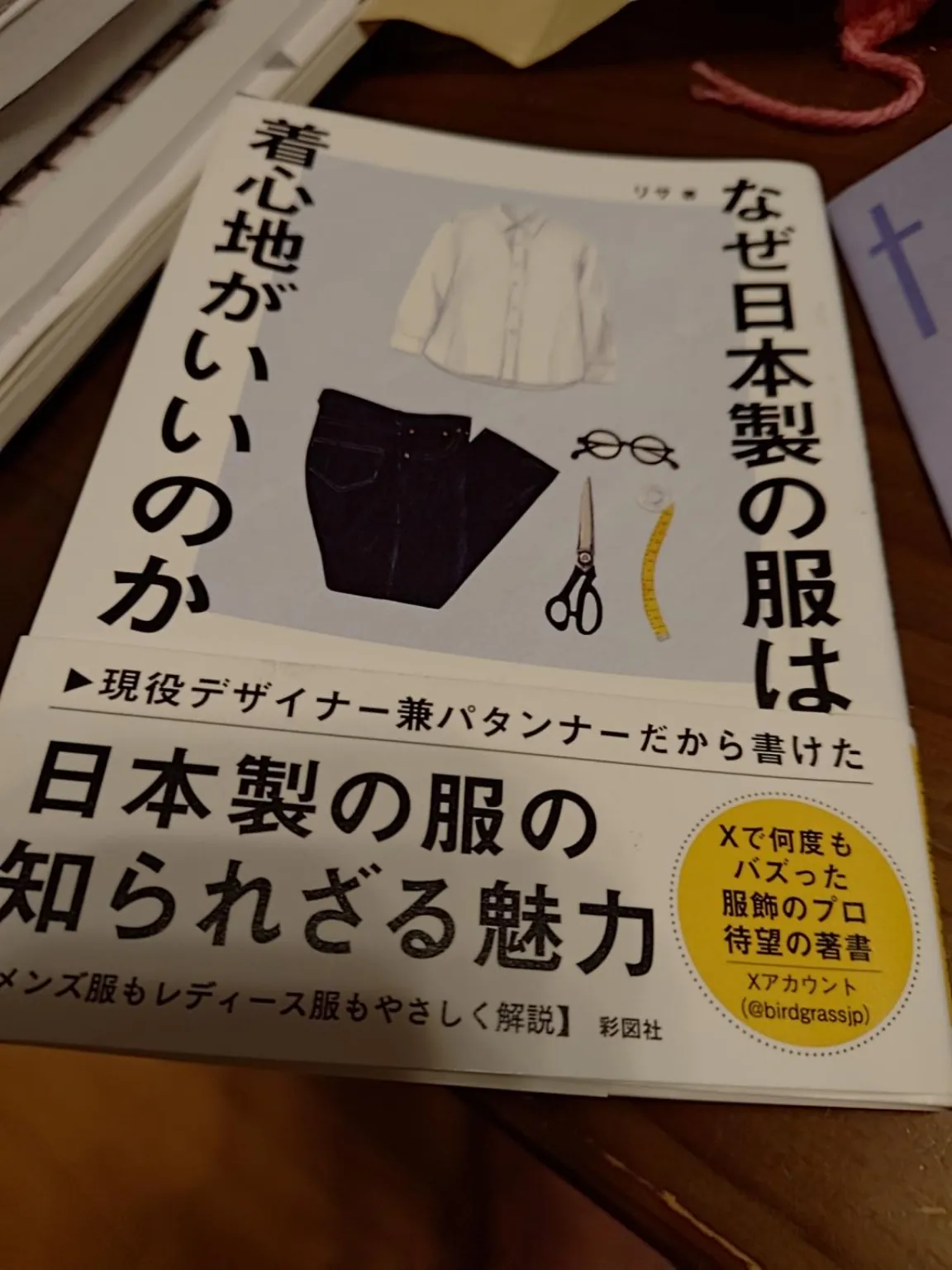
A Japanese book about the comfort and quality of clothing made in JapanThe official MAKE KYOTO MK seal design, in red

LATEST INFORMATION

NEWS & UPDATES.

Shop opening announcements, new arrivals, and changes to opening hours will be posted here.

OPENING INFORMATION

Our opening date is coming soon.

The confirmed address, business hours, and opening date will be announced here.

SHOP NOTICES

Stay up to date.

Temporary closures and schedule changes will be highlighted here when the shop opens.

Preview content — not an announcement of a confirmed opening date.

FOLLOW OUR KYOTO STORY

BE PART OF THE STORY.

Discover new designs, watch how our gifts come to life, and follow our journey in Kyoto.

INSTAGRAM

Scenes from MAKE KYOTO.

Design details, Japanese craftsmanship, and everyday life around our little shop.

Official account link will be added after setup.

TIKTOK

See the making.

Short videos of customizing tote bags, applying kanji patches, and stamping washi bookmarks.

Official account link will be added after setup.

YOUR VOICE

LEAVE A NOTE.

Share a memory or a message. Comments will be reviewed before publication when the live website launches.

This is a visual preview. Comments cannot be submitted yet.

04 / VISIT US

Find us at the Ginkaku-ji approach entrance.

MAKE KYOTO is preparing to open at the entrance to the approach to Ginkaku-ji (Ginkakuji), also known as the Silver Pavilion, in Kyoto. We are at the beginning of the approach, not at the temple gate. Look for the shop entrance up the steps on the right.

Looking for unique Kyoto souvenirs or Japanese-made T-shirts near Ginkakuji? Follow our opening updates here.

Shop opening, exact address and business hours will be announced once confirmed. All store images are conceptual.

CONTACT US ↗

THE FINAL TOUCH

Carry your Kyoto memories.

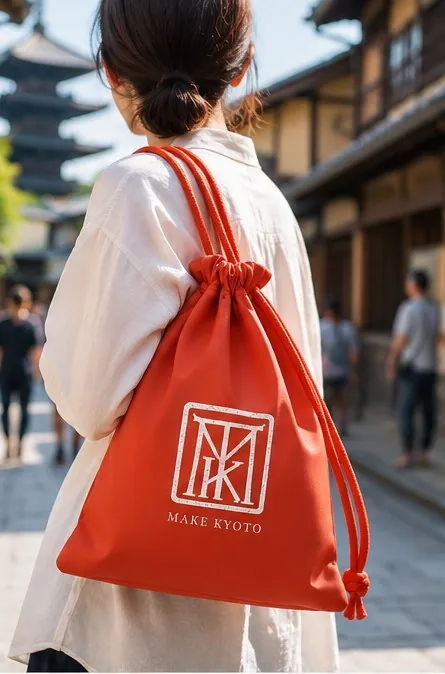
Traveler carrying a vermilion MAKE KYOTO drawstring shopper on a Kyoto street
MAKE KYOTO SHOPPER

Carry your memories.

A vermilion drawstring shopper to take a little piece of Kyoto with you. Concept image.